In This Article
- The Performance Gap Between Leaders and Laggards
- Six Managed IT Services Driving Online Lender Success
- The Pure Microsoft Stack Advantage
- The Productized ABT Stack: MortgageWorkSpace and MortgageExchange
- Calyx PointCentral on Azure + M365 Guardian: Managed LOS with Governance
- How to Close the Gap
- Frequently Asked Questions
90% of Homebuyers Want a Digital Mortgage Process. The Lenders Winning That Business Run Managed IT.
Fannie Mae found that 90% of homebuyers in 2024 wanted a more digital or fully digital mortgage process. Financial institutions responded by nearly quadrupling their tech spend per $1 billion in assets, jumping from $200K in 2022 to $780K in 2024. And MBA projects originations to reach $2.2 trillion in 2026.
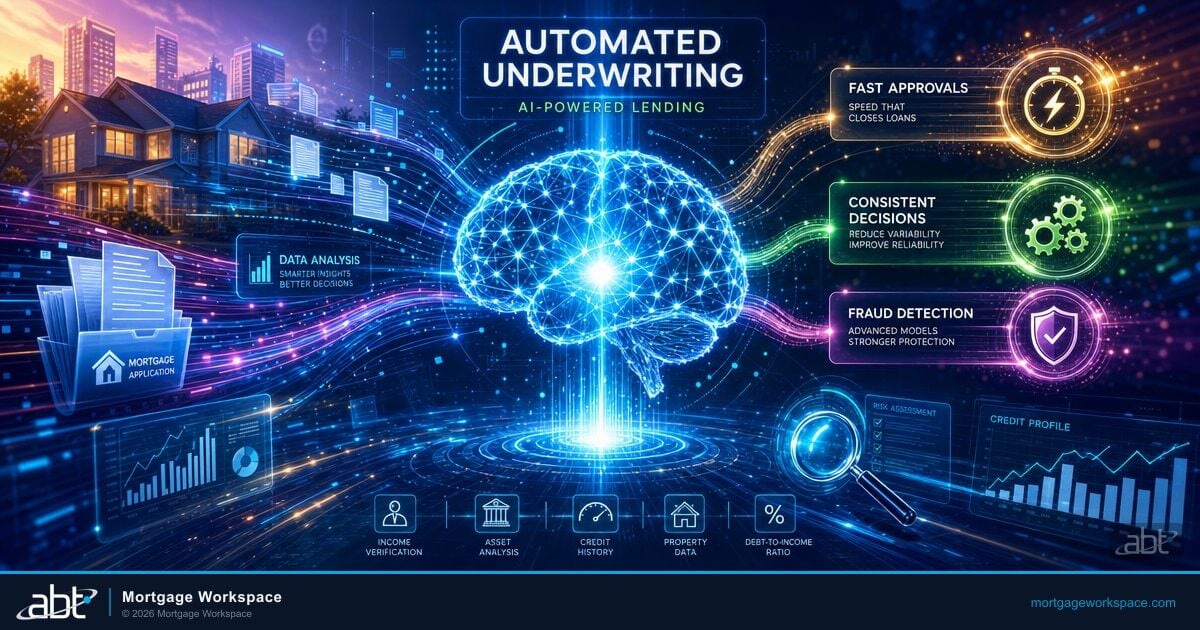
But here is what separates the leaders: it is not the software. The top performing online lenders do not just buy better tools. They run those tools on managed IT infrastructure that keeps systems fast, secure, integrated, and compliant. ICE Mortgage Technology data shows that lenders with integrated, automation ready platforms reduced cycle times by three days and increased gross profit per loan by $1,056.
This article breaks down the six managed IT service categories that the best online lenders use, why each one matters, and how to close the gap if your operations are falling behind.
The Performance Gap Between Leaders and Laggards
The gap between top online lenders and the rest is not about product selection. Seventy five percent of mortgage executives believe additional technology investment is needed to compete as market leaders. Yet less than 10% have the resources to properly scale operations. The disconnect comes down to operational infrastructure.
Top lenders invest in six specific managed IT service areas that create compound advantages:
- Every system connects to every other system through governed integrations
- Security monitoring runs 24/7, not just during business hours
- Compliance evidence generates automatically, not through manual spreadsheets
- Infrastructure scales with volume instead of breaking under it
- Staff spend time on loans, not on troubleshooting technology
The Mortgage Collaborative noted at MBA 2025 that lenders spent the first half of 2025 ripping out redundant technology bought during COVID. The ones who came out stronger had managed IT partners who maintained architectural discipline through the buying spree.
Six Managed IT Services Driving Online Lender Success
1. Identity and Access Management
Borrower data flows through dozens of systems. Every loan officer, processor, underwriter, and vendor needs controlled access. Top lenders use centralized identity management through Microsoft Entra ID with Conditional Access policies that enforce MFA, device compliance, and risk based authentication.
The managed service component matters because identity management is not a set it and forget it task. Access reviews must happen quarterly. Offboarding must revoke access within hours. Service accounts for LOS and CRM integrations need regular credential rotation. A managed IT partner handles this operational overhead while your team focuses on lending.
2. Endpoint Security and Device Management
Loan data lives on laptops, desktops, and mobile devices across branch offices and remote locations. The best online lenders manage every device through platforms like Microsoft Intune, enforcing security baselines, patch deployment, and encryption. Endpoint Detection and Response (EDR) catches threats that prevention alone misses.
This is not optional. Thirty eight percent of lenders now use AI in some form. AI tools running on unmanaged, unpatched endpoints create attack surfaces that did not exist five years ago.
3. Cloud Infrastructure and Hosting Management
Online lenders need infrastructure that scales during application surges without degrading borrower experience. Managed cloud services handle capacity planning, performance monitoring, cost optimization, and failover configuration. The best lenders run hybrid environments where sensitive borrower data stays in controlled infrastructure while scalable workloads run in the public cloud. We cover Integrating Financial Services Cloud with Mortgage Platforms in a companion piece.
Eighty two percent of financial firms now operate multi cloud or hybrid strategies. But without managed oversight, cloud costs creep upward while performance problems hide until peak volume exposes them.
4. Security Monitoring and Managed Detection
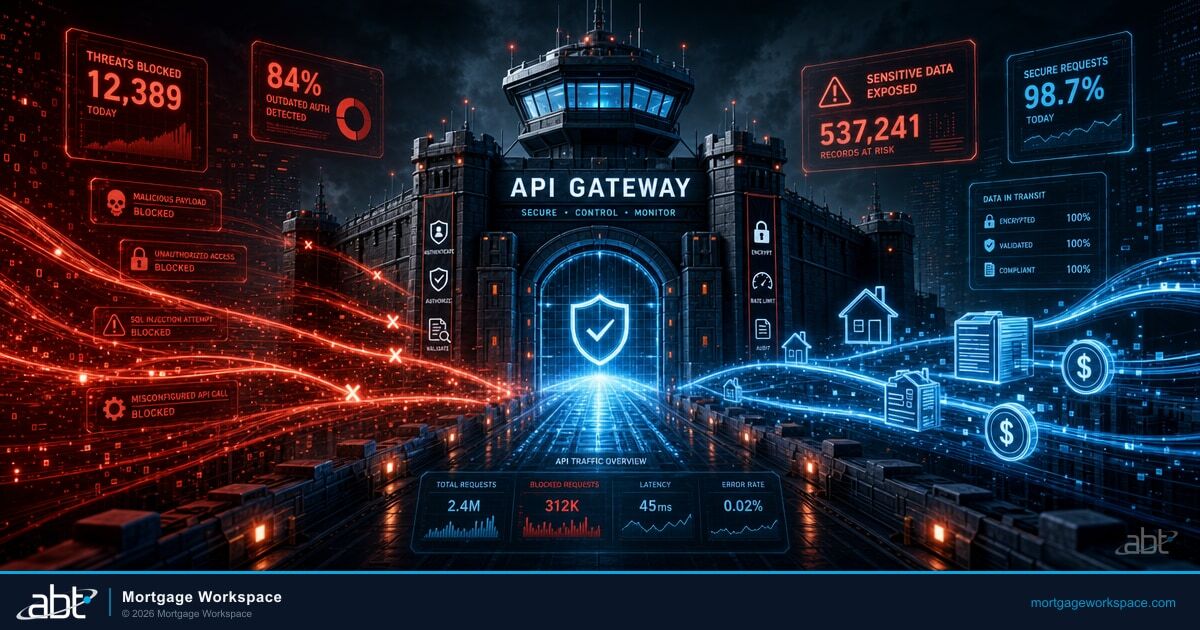
Top online lenders run 24/7 security monitoring through managed detection and response services. This includes real time log analysis, threat intelligence correlation, behavioral anomaly detection, and incident response. The managed service provider acts as the security operations center that most mortgage companies cannot afford to build internally.
Forty seven percent of financial services firms cite sophisticated cyberattacks as their primary security concern. The response requires continuous monitoring, not periodic assessments.
5. Compliance Automation and Audit Readiness
The best lenders do not prepare for audits. They are always audit ready. Managed IT services automate compliance evidence collection for GLBA, FTC Safeguards Rule, FFIEC guidelines, and state level requirements. Real time dashboards track policy compliance, access control status, encryption coverage, and training completion.
STRATMOR's Technology Insight Study found that RPA adoption among lenders climbed from 30% in 2020 to 48% in 2024. Compliance automation is the highest impact area for that investment. When auditors arrive, managed IT clients present real time dashboards instead of scrambling through spreadsheets.
6. Business Continuity and Disaster Recovery
Online lending means borrowers expect your systems to work 24/7. Business continuity planning and managed disaster recovery ensure that borrower portals, LOS access, and communication tools survive outages. Testing happens quarterly, not theoretically. Recovery times are measured and documented. See also our breakdown of Scaling Smarter.
Research from Nasuni shows that organizations with hybrid cloud infrastructure recover from disruptions faster than those without. For online lenders, downtime during a rate drop or seasonal surge costs real loans and real revenue.
The Pure Microsoft Stack Advantage
The best performing managed IT environments for mortgage lending run a pure Microsoft stack: Microsoft Entra ID, Microsoft Intune, Microsoft Defender, Conditional Access, Microsoft Purview, and Microsoft Sentinel. No third party MSP platforms like ConnectWise, Kaseya, or SolarWinds in the middle.
This matters because third party MSP platforms have a track record of security incidents. The ConnectWise ScreenConnect vulnerability in February 2024, the Kaseya VSA attack in July 2021, and the SolarWinds breach in December 2020 all hit mortgage companies that depended on those platforms. A pure Microsoft stack eliminates that supply chain risk.
When your managed services partner runs the same platform your security depends on, there is no gap between the tools that monitor threats and the tools that manage your environment.
The Productized ABT Stack: MortgageWorkSpace and MortgageExchange
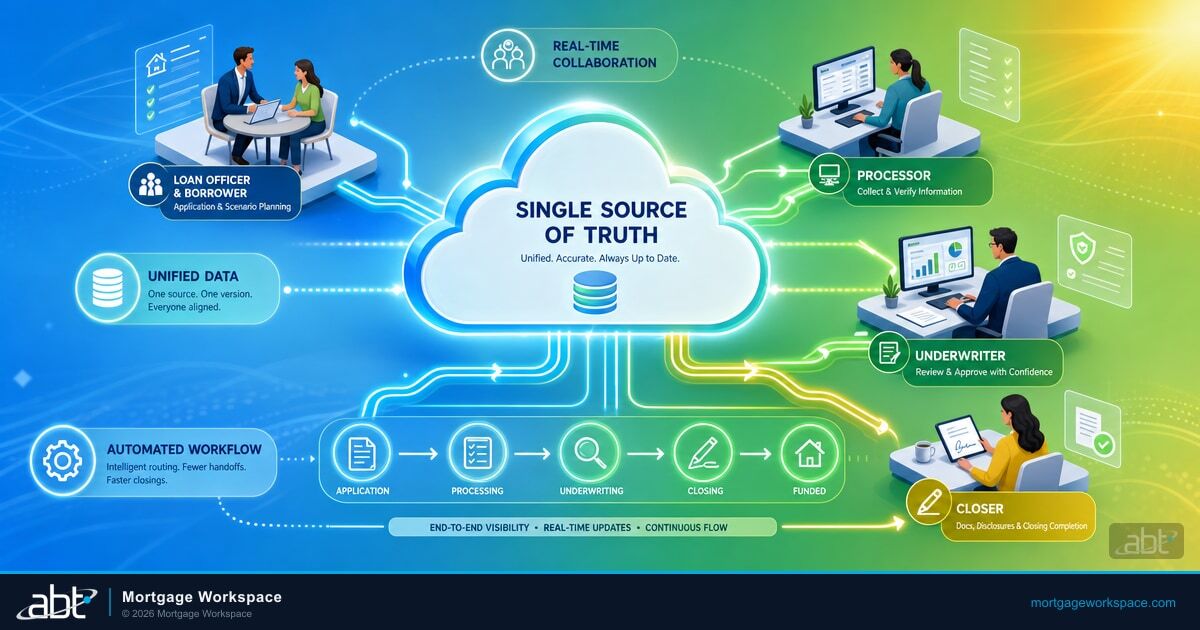
The best online lenders are not stitching together six separate managed IT vendors. They are buying a productized stack that already covers the six categories above, tuned for mortgage operations. That stack, for the lenders Access Business Technologies serves, is MortgageWorkSpace for the Microsoft 365 operating environment and MortgageExchange for the system to system integrations that move loans through origination, underwriting, closing, and servicing. MortgageWorkSpace runs the Microsoft Entra ID identity layer, the Microsoft Intune device baseline, the Microsoft Defender threat surface, and the Microsoft Purview retention and DLP layer as a single configured product, not as a custom build. MortgageExchange runs the governed connections between the loan origination system, the core banking platform, the document management system, the disclosure vendor, and the title and closing partners, so loan data moves through a single integration plane that ABT operates and monitors.
That productization is the operational reason ABT clients close loans faster and pass examinations more cleanly than lenders running an ad hoc collection of point solutions. There is one operating model, one partner accountable for it, and one configuration baseline applied across every workstation, mobile device, mailbox, and integration in the lender's footprint. MortgageWorkSpace and MortgageExchange together cover all six managed IT categories that the best online lenders run on, which is why mortgage companies who outgrow generic MSPs migrate to the dual brand mortgage vertical that ABT operates through mortgageworkspace.com.
Calyx PointCentral on Azure + M365 Guardian: Managed LOS with Governance
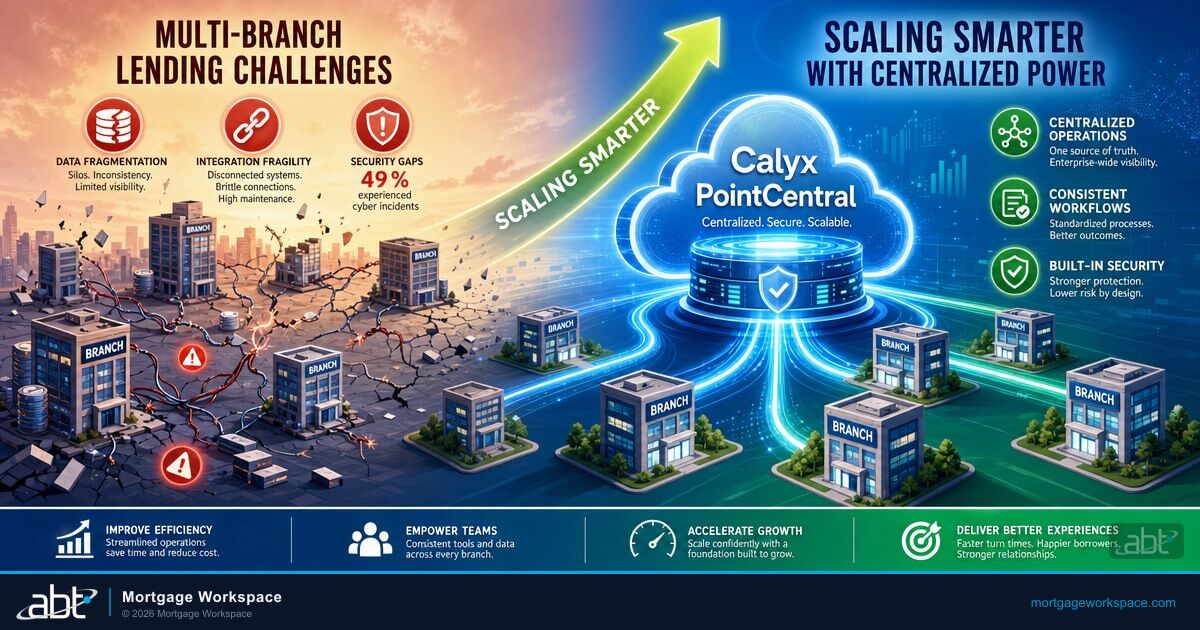
For lenders running Calyx PointCentral as their loan origination system, ABT hosts the PointCentral environment on Microsoft Azure inside a customer dedicated subscription that ABT operates as the partner of record. The Azure hosting model gives the lender the per company resource isolation a regulated mortgage shop needs (no shared tenant, no noisy neighbor performance issues, no surprise reconfiguration from a multi tenant vendor) while ABT runs the underlying virtual machines, the storage redundancy, the backup posture, and the patch cadence. The lender experiences Calyx PointCentral as a managed service that scales with origination volume rather than as on premise software the IT team has to keep alive.
Sitting on top of that managed LOS is M365 Guardian, ABT's operating model for Microsoft 365 inside regulated financial services firms. Guardian layers mortgage tuned Conditional Access, mortgage specific DLP, the Microsoft Sentinel SIEM tuned to loan officer and processor behavior, and the 24/7 security operations center that watches the Microsoft Defender and Sentinel signals every minute of the day. Guardian is the governance side of the productivity story: MortgageWorkSpace and Calyx PointCentral deliver the productivity unlock, and M365 Guardian protects it without slowing how loans actually close. ABT manages all of it under a Tier 1 Microsoft Cloud Solution Provider relationship with Granular Delegated Administrative Privileges, so the partner role is scoped and documented for the lender's vendor oversight program. Our guide to Better Lending Starts with Smarter IT goes deeper on this.
How to Close the Gap
Step 1: Audit your current IT services. Map what is managed, what is maintained internally, and what is running unmanaged. Most lenders find significant gaps in monitoring, endpoint management, and compliance automation.
Step 2: Prioritize by impact. Identity management and endpoint security produce the fastest security improvements. Compliance automation produces the fastest operational efficiency gains. Start where the pain is worst.
Step 3: Consolidate vendors. If you are buying licensing from one vendor, managed services from another, and security from a third, you are paying for coordination overhead. A single managed IT partner that handles licensing, security, compliance, and operations eliminates gaps between vendors.
Step 4: Measure results. Track mean time to detect threats, patch currency, compliance readiness scores, and infrastructure uptime. Compare against industry benchmarks quarterly.
Key Takeaway
The best online lenders do not buy six point solutions and hope they integrate. They run a productized managed IT stack with one partner accountable for it. For the mortgage companies Access Business Technologies serves, that stack is MortgageWorkSpace for the Microsoft 365 operating environment, MortgageExchange for the system to system integrations, Calyx PointCentral hosted on Microsoft Azure for the loan origination system, and M365 Guardian for the security and governance layer. One operating model, one partner, one configuration baseline across 750+ financial institutions.
Talk to a Mortgage IT Specialist About the ABT Managed Stack
ABT runs MortgageWorkSpace, MortgageExchange, Calyx PointCentral hosting on Azure, and M365 Guardian for mortgage lenders that have outgrown generic MSPs. A 30 minute conversation maps your current managed IT footprint, surfaces the gaps your next examination is most likely to find, and outlines what an ABT managed deployment would cover. No commitment, no quote, no obligation.
Frequently Asked Questions
Top online lenders invest in six managed IT service categories: identity and access management, endpoint security and device management, cloud infrastructure hosting, 24/7 security monitoring with managed detection, compliance automation for audit readiness, and business continuity with disaster recovery. Together these services create the operational infrastructure that supports fast, secure, and compliant lending at scale.
ICE Mortgage Technology data shows that lenders with integrated, automation ready platforms reduce cycle times by three days, improve operational leverage by 23%, cut error rates by 13%, and increase gross profit per loan by $1,056. Managed IT services create the integration layer, monitoring, and compliance automation that make these efficiency gains possible across the entire loan lifecycle.
Third party MSP platforms like ConnectWise, Kaseya, and SolarWinds have suffered major security incidents that affected their mortgage clients. A pure Microsoft stack eliminates that supply chain risk by removing intermediary platforms between your security tools and your managed environment. When the monitoring platform is the same as the management platform, there are no gaps for attackers to exploit.
Evaluate providers on five criteria: mortgage industry experience with regulatory knowledge covering GLBA and CFPB requirements, the technology stack they use and whether it introduces third party platform risk, their ability to provide all six service categories under one relationship, SOC 2 Type II certification for their own operations, and references from mortgage companies of similar size and complexity to yours.
Yes. ABT hosts Calyx PointCentral on Microsoft Azure inside a customer dedicated subscription that ABT operates as the partner of record. The Azure hosting model gives the lender per company resource isolation while ABT runs the underlying virtual machines, storage redundancy, backup posture, and patch cadence. That Calyx PointCentral hosting sits inside the broader ABT managed stack that also includes MortgageWorkSpace for the Microsoft 365 operating environment, MortgageExchange for system to system integrations, and M365 Guardian for the security and governance layer. The lender experiences Calyx PointCentral, MortgageWorkSpace, MortgageExchange, and M365 Guardian as a single productized stack under one partner relationship.