In This Article
- The Hidden Cost of a Standalone CRM at a Mortgage Brokerage
- What You Already Own Inside Microsoft 365
- Where Microsoft 365 Copilot Replaces the Standalone CRM Workflow for Brokers
- Why MortgageExchange Is the Layer That Makes Microsoft 365 a Working CRM for Brokers
- M365 Guardian: The Governance Layer That Protects Borrower NPI While Copilot Works
- CRM Vendor Tactics That Waste a Brokerage's Budget
- Five Capabilities That Actually Close Loans
- How to Evaluate a Mortgage CRM Without Getting Sold
- The ABT Tier-1 CSP Advantage for Mortgage Brokers
- Frequently Asked Questions
A mortgage broker shopping for a new customer relationship management platform in 2026 has almost always already paid for one. Microsoft 365 Business Premium, E3, or E5 ships with Outlook, Teams, SharePoint, OneDrive, the Power Platform, and (with the right add-on) Microsoft 365 Copilot. Together those tools cover the substantive work a standalone CRM is sold to do: track borrower interactions, surface follow-ups, route loan documents, search every conversation by topic, and produce a clean pipeline view. The standalone CRM gets bolted on top, the loan origination system integration project starts, the data sync breaks on a Tuesday night, the licensing bill compounds, and the productivity gap the CRM was supposed to close stays open. Access Business Technologies is a Tier-1 Microsoft Cloud Solution Provider that manages Microsoft 365 tenants for more than 750 financial institutions, and the conversation most independent mortgage brokers have with ABT before buying CRM is the same one: before you buy something new, look at what you already own and what is wired to it.
Why ABT Runs Microsoft 365 + Copilot + MortgageExchange Before a Standalone CRM
- Microsoft 365 Business Premium and E3/E5 already include the substantive broker workflow. Outlook keeps the borrower correspondence record. Teams keeps the call and meeting record. SharePoint and OneDrive keep the loan document record. The Power Platform lets a brokerage model a pipeline view on top of that record without licensing a separate database.
- Microsoft 365 Copilot does the work loan officers used to retype. Drafting a follow-up to a borrower who has not returned pay stubs, summarizing a 30-minute call with a referral partner, pulling a pipeline view from Outlook conversations, and surfacing stalled files no longer require an LO to log into a second system.
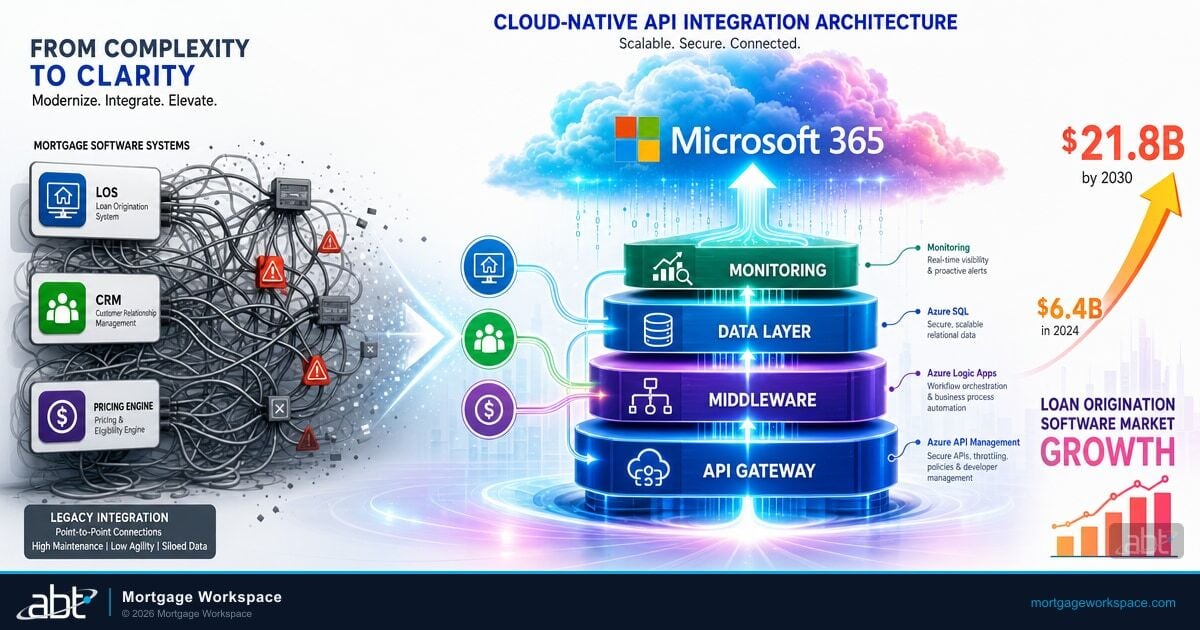
- MortgageExchange is the integration layer that ties Microsoft 365 to your loan origination system. The CRM workflow only works if data moves cleanly between Outlook, SharePoint, and the LOS the brokerage closes loans in. ABT operates the MortgageExchange interfaces that link Microsoft 365 to Encompass, Calyx Point, and other LOS platforms used by independent mortgage brokers.
- M365 Guardian is the governance layer that keeps borrower NPI safe while Copilot reads across the tenant. ABT applies Microsoft Purview, Microsoft Defender, Microsoft Entra ID Conditional Access, and Microsoft Intune policies tuned for GLBA, FTC Safeguards Rule, CFPB, and state privacy expectations so Copilot can read what it needs to read without leaking borrower data to the wrong audience.
The mortgage broker CRM market grew sharply through 2025 and 2026 as brokerages invested in pipeline tools to handle rising volume. The Mortgage Bankers Association projects $2.2 trillion in single-family origination volume for 2026, up roughly 8 percent from 2025. Most of those same brokerages also licensed Microsoft 365 in the same procurement cycle. The trap is that the two purchases get evaluated separately. The CRM is bought as if Microsoft 365 did not exist, and Microsoft 365 is operated as if it were only email and document storage. This guide frames the question the other way around: what does an independent mortgage broker actually get from the Microsoft 365 footprint already on the books with Microsoft 365 Copilot turned on, MortgageExchange wired to the LOS, and M365 Guardian governing the tenant, and where is a separate CRM still the right answer?
The Hidden Cost of a Standalone CRM at a Mortgage Brokerage
The visible cost of a standalone CRM at a mortgage brokerage is the per-loan-officer license. The invisible costs are larger. There is the integration engineering bill to connect the CRM back to the loan origination system. There is the data sync that breaks overnight and silently drops three borrower records, surfacing two weeks later when an LO cannot find a borrower's conversation history five days before rate lock expires. There is the duplicate retention policy the compliance manager has to defend at the next CFPB or state examination, because the CRM is storing the same borrower correspondence the brokerage already retains in Exchange Online. There is the user-adoption cost, because the same loan officers who already know Outlook now have to learn a second interface that does most of what Outlook does and a little more.
The biggest hidden cost is the productivity gap the CRM was supposed to close. A loan officer at an independent brokerage spends a substantial share of the work week on administrative tasks: drafting follow-ups, summarizing borrower calls, tracking missing documents, building pipeline reports. A standalone CRM moves some of that work to a different screen. It does not actually do the work. Microsoft 365 Copilot inside Outlook and Teams does the work. Asked to draft a follow-up to a borrower who has not returned pay stubs in five days, Copilot produces the draft using the existing correspondence thread. Asked to summarize a 45-minute Teams call with a referral real estate agent, Copilot produces the summary tied to the meeting transcript. Asked to surface every loan in the pipeline that has not moved in seven days, Copilot pulls the answer from the email and calendar metadata the brokerage already has.
Before a mortgage broker buys a new CRM, the first question is whether Microsoft 365 with Copilot turned on and MortgageExchange wired to the LOS does what the CRM was supposed to do.
What You Already Own Inside Microsoft 365
Microsoft 365 Business Premium, E3, and E5 ship with the building blocks a standalone mortgage CRM is sold to provide. The blocks are not labeled "CRM" in the Microsoft licensing guide, which is one reason brokerages miss them. The substantive workflow is there.
Microsoft Outlook is the borrower correspondence record. Every email, calendar entry, and contact attached to a loan lives there already. Microsoft Teams is the call and meeting record, with transcripts Copilot can summarize. Microsoft SharePoint and Microsoft OneDrive hold the loan document record with retention policies enforceable across the tenant. Microsoft 365 Copilot reads across all of it, drafts the follow-up to a borrower or referral partner, summarizes the meeting, and surfaces stalled files. Microsoft Power Platform lets a brokerage model a pipeline view on top of that record using Power Apps and Dataverse without licensing a separate CRM database. Microsoft Purview applies Data Loss Prevention and retention policies across every one of those surfaces, so borrower NPI does not leak when Copilot reads from them. Microsoft Entra ID enforces Conditional Access and Multi-Factor Authentication on every sign-in. Microsoft Intune posture-checks every device that touches brokerage data, including the personal laptop a loan officer carries to an open house. ABT layers M365 Guardian on top of the Microsoft baseline so the brokerage has a documented governance model rather than a collection of unrelated configurations, and MortgageExchange wires the Microsoft 365 surface to the loan origination system so the data flow is real and bidirectional.
What Microsoft 365 with Copilot does not do is replicate every CRM-specific feature in every mortgage vertical. A high-volume purchase brokerage running heavy real-estate-agent referral campaigns may still want a marketing automation tool. A wholesale broker with a network of branch loan officers and complex commission tracking may still want a vertical CRM. A retail broker running a sophisticated lead-acquisition program with multi-touch attribution may still want a vertical platform. The point is not that Microsoft 365 replaces every CRM. The point is that for the broker's substantive borrower-relationship and document workflow, the brokerage already pays for the platform that does the work, and the standalone CRM is a fourth or fifth tool on top of that platform rather than the first one.
Where Microsoft 365 Copilot Replaces the Standalone CRM Workflow for Brokers
Most of the work a loan officer, processor, or junior LO does inside a CRM resolves to four patterns. Microsoft 365 Copilot, paired with Outlook, Teams, SharePoint, and the Power Platform, addresses each one without a separate platform.
| What the role does today inside a standalone mortgage CRM | What Microsoft 365 Copilot does inside Outlook, Teams, and SharePoint |
|---|---|
| Logs a borrower or referral-partner call summary into the CRM after the meeting ends. | Copilot summarizes the Teams meeting from the recorded transcript, captures action items, and posts the summary to the SharePoint loan folder or OneNote notebook attached to the file. |
| Drafts a follow-up email in the CRM and pastes it into the email client. | Copilot drafts the follow-up email directly inside Outlook using the existing correspondence thread, with the right tone for the relationship and the right citations to prior emails. |
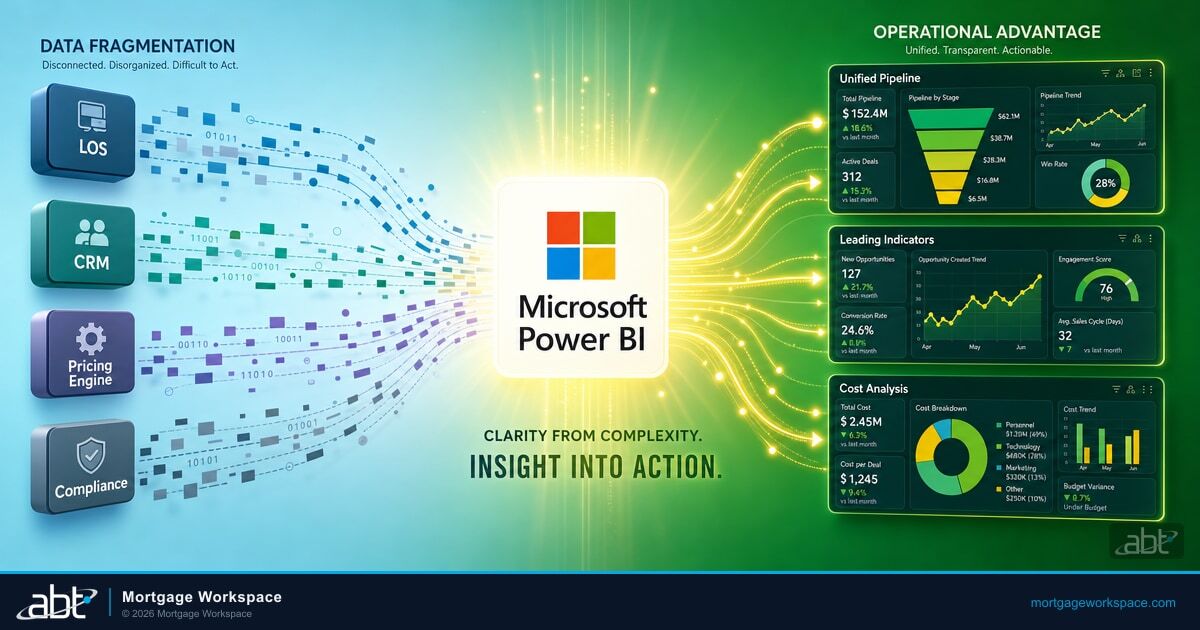
| Builds a pipeline report by exporting CRM data to Excel and pivoting on stage and owner. | Copilot reads the email and calendar metadata, builds the pipeline view as a Power BI report on top of Dataverse, and updates it continuously without a manual export. |
| Tracks document deadlines (TRID timing, GLBA disclosure delivery, rate lock expiration, appraisal turnaround) inside a CRM checklist. | Power Automate fires from the SharePoint loan document library, Outlook calendar, or Microsoft Forms intake and routes the deadline to the right person. Microsoft Purview retention policies bind the documents to GLBA, FTC Safeguards Rule, and state-level retention expectations. |
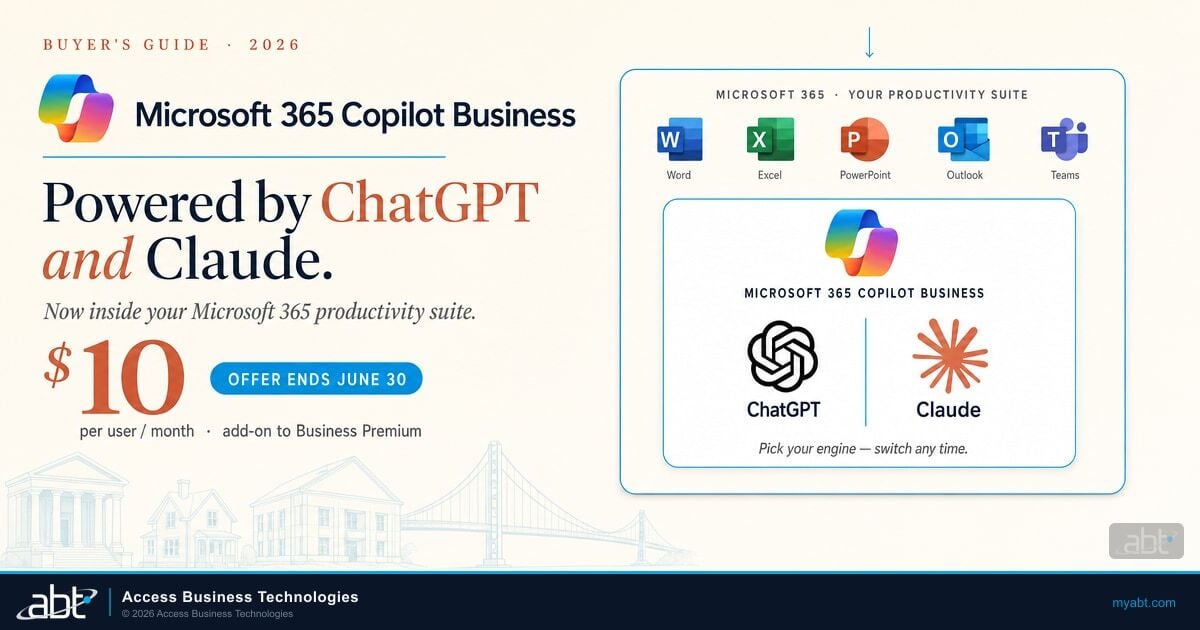
The Copilot pattern is not theoretical. ABT runs it inside the brokerages ABT manages. The Microsoft 365 Copilot Business tier and the standalone Microsoft 365 Copilot add-on both deliver the workflow described above. Copilot Business is priced for small and mid-size brokerages; the standalone Copilot add-on attaches to Business Premium or E3/E5 for shops that want the full Copilot Enterprise feature set including Copilot Studio. The choice depends on tenant size and licensing, not on whether the brokerage is ready for Copilot. By the time a broker is shopping for a CRM, the licensing question is the easier part of the conversation.
Why MortgageExchange Is the Layer That Makes Microsoft 365 a Working CRM for Brokers
Microsoft 365 plus Copilot covers the borrower correspondence, the document library, the meeting transcripts, and the pipeline reporting. What it does not do natively is push loan-stage updates back into the loan origination system the brokerage closes loans in, or read loan-stage events from the LOS into the Microsoft 365 surface where the loan officers actually work. That bridge is the difference between a mortgage CRM and a glorified contact list. It is also where the standalone CRM vendors quietly admit "the integration is on the roadmap."
MortgageExchange is the integration product ABT operates that closes that gap. It is the largest interface ABT runs, with bidirectional data flow between Microsoft 365 and the common LOS platforms independent mortgage brokers actually use. When a borrower's status changes in Encompass or Calyx Point, MortgageExchange surfaces the change inside the Microsoft 365 tenant where the loan officer's pipeline view, email correspondence, and document folder already live. When the loan officer adds a note in Outlook or marks a milestone in a SharePoint list, MortgageExchange writes the relevant context back to the LOS so the processor downstream is not flying blind. The brokerage gets a single working pipeline view across Microsoft 365 and the LOS rather than two parallel records that drift apart between Tuesday afternoon and Friday morning.
The integration question is the one most broker CRM evaluations skip. Nonbank mortgage lenders now service 66 percent of federally backed mortgages, up from 27 percent in 2014, according to a February 2026 GAO report. As nonbank brokers handle more volume, the integration requirement between Microsoft 365, the LOS, and the surrounding stack (credit reporting, AUS, document management, marketing automation) only gets more complex. A CRM that does not connect cleanly with the LOS creates data silos, manual workarounds, and compliance blind spots that show up in CFPB and state-examination findings later. We cover The Benefits of Mortgage Management with MISMO Certified Partners in a companion piece.
An independent broker buys a standalone mortgage CRM. The integration with Encompass is described as "native" in the demo. Three months in, the loan officers are exporting CSVs out of the CRM every Friday afternoon because the bidirectional sync drops borrower status updates. A processor at the back of the pipeline misses a missing-conditions alert and the loan closes three days late. The borrower complains to the loan officer. The loan officer blames the CRM. The CRM vendor blames the LOS. Nobody owns the data flow. See also our breakdown of Mortgage Software Integration with Cloud Technology.
The same broker keeps Microsoft 365 as the working surface for loan officers and adds MortgageExchange as the integration layer to Encompass. Borrower status updates flow in real time between Microsoft 365 and the LOS. The loan officer's pipeline view inside Power BI on Dataverse reflects the same state the processor sees inside Encompass. Missing-conditions alerts fire as Power Automate flows from the SharePoint document library to the right person before the borrower notices the slip. The brokerage owns one pipeline of truth across Microsoft 365 and the LOS, and the data flow is documented in a vendor-oversight artifact a compliance manager can hand to a CFPB examiner.
M365 Guardian: The Governance Layer That Protects Borrower NPI While Copilot Works
The hesitation most chief operating officers, compliance managers, and IT leads raise about Microsoft 365 Copilot at a mortgage brokerage is the right one: a productivity assistant that can read across every borrower email, every meeting transcript, and every loan document folder is also an assistant that can read borrower Non-Public Information. If a Copilot prompt summarizes the wrong inbox, if a Copilot answer surfaces data the prompting user was not entitled to see, the brokerage is the one that owns the GLBA and FTC Safeguards Rule exposure. Microsoft Copilot inherits the permissions the prompting user already has, which means the safety of Copilot depends entirely on whether those underlying permissions are correctly configured in the first place. They almost never are on day one. The configuration work is governance work, not Copilot work.
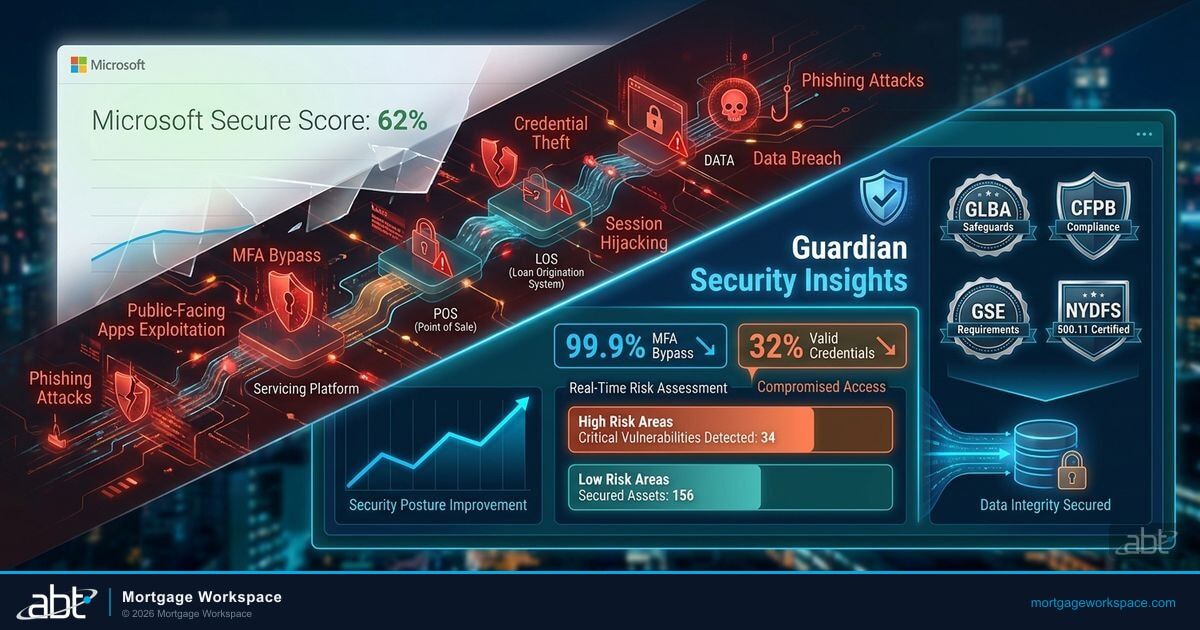
M365 Guardian is the operating model ABT applies on top of the Microsoft baseline to close that governance gap before Copilot is turned on across the brokerage. The Guardian layer is not a separate product the broker buys from a different vendor. It is the configuration, the documentation, and the monitoring of the Microsoft tools the brokerage already licenses. The components are Microsoft. The layered design is ABT's contribution. Microsoft Purview applies Data Loss Prevention, Sensitivity Labels, Information Protection, and retention policies tuned to GLBA, FTC Safeguards Rule, CFPB record-retention expectations, and state privacy rules. Microsoft Defender for Office 365 and Microsoft Defender for Endpoint produce the detection layer. Microsoft Sentinel aggregates the signals into a single incident view a security operations center can act on. Microsoft Entra ID Conditional Access enforces Multi-Factor Authentication, sign-in risk policies, and device-compliance requirements on every Copilot session. Microsoft Intune posture-checks every device that touches Copilot output, including the loan officer's personal laptop at an open house or kitchen-table application. The brokerage gets the productivity unlock with the governance evidence ready for the next examination or state audit.
Guardian is the lead reason ABT brokerage customers turn on Microsoft 365 Copilot with confidence rather than caution. The productivity gain is real. The governance work to make the productivity gain safe is also real. ABT does the governance work as part of the standing customer relationship, then turns Copilot on across the brokerage under documented controls. Examiners accept documented controls. They write findings on undocumented ones.
CRM Vendor Tactics That Waste a Brokerage's Budget
None of the above means a mortgage broker should never buy a standalone CRM. Some brokerages have specialized verticals (high-volume purchase shops running heavy real-estate-agent referral channels, wholesale brokers operating complex commission structures, retail brokerages running multi-touch lead acquisition) where a vertical CRM still earns its license cost. The point is the decision should follow an honest accounting of what Microsoft 365 plus Copilot plus MortgageExchange already does, not a vendor's feature flood. Three vendor tactics show up repeatedly when CRM platforms are sold to independent mortgage brokers.
The Feature Flood
A vendor walks the brokerage through more than 100 features in a 45-minute demo. Most independent brokers end up using 15 to 20 percent of the platform's functionality. The remaining features increase licensing cost without increasing productivity. Before any demo, write down the five outcomes the brokerage actually needs from the platform. If the vendor spends more time on the extras than on those five outcomes, the platform is mis-fit.
The "AI-Powered Everything" Pitch
Every mortgage CRM vendor in 2026 markets AI on lead scoring, email drafting, and pipeline forecasting. Some deliver substantive value. Many are repackaged automation with a new label. Ask direct questions: what data does the model train on, how does the brokerage control whether borrower data is used for vendor model training, and where does the model run relative to the brokerage's Microsoft 365 tenant. Microsoft 365 Copilot does the same drafting and summarization work without sending borrower data outside the brokerage's tenant boundary.
The ROI Promise
"Our brokers see 4x ROI within six months." The claim is nearly impossible to verify because the CRM vendor does not control the variables that drive mortgage revenue. Rate environment, referral relationships, real estate agent partnerships, and loan officer skill matter more than software. A good platform removes friction. It does not generate revenue on its own.
Five Capabilities That Actually Close Loans
Skip the feature comparison spreadsheets. These five capabilities separate platforms that produce closings from those that collect dust. Some live inside Microsoft 365 and Copilot already. Some require MortgageExchange to wire the LOS to Microsoft 365. The question is which platform owns each one in the brokerage's stack.
Pipeline Visibility with Milestone Tracking
Every loan in progress, the stage it sits at, who owns it, and what has stalled. Microsoft 365 Copilot pulls the working view from Outlook and calendar metadata. Power BI on top of Dataverse turns it into a continuous dashboard. MortgageExchange feeds loan-stage events from Encompass or Calyx Point into the same view in real time.
Event-Driven Automation
Communications and document routes triggered by specific events (rate lock expiration approaching, missing pay stubs, appraisal completed, closing date confirmed) rather than generic drip campaigns. Microsoft Power Automate handles the routing inside the Microsoft 365 tenant, with MortgageExchange firing LOS-event triggers into the same flow.
Bidirectional LOS Integration
Microsoft 365 and the LOS share data in real time. One-way sync is not integration. It is a workaround that creates more problems than it solves. MortgageExchange is the integration layer ABT operates to keep Microsoft 365 and Encompass, Calyx Point, and other broker-stack LOS platforms in continuous bidirectional sync.
Full-Function Mobile Access
Loan officers meet borrowers at kitchen tables, open houses, and coffee shops. Outlook, Teams, and SharePoint mobile apps already deliver the substantive workflow on any compliant device under Microsoft Intune protection. Conditional Access blocks borrower data from devices that fall out of compliance.
Compliance-aware document management is the fifth and often most overlooked capability. Mortgage transactions generate dozens of documents per loan. The platform that stores them must produce audit trails on demand, retention policies tied to GLBA, FTC Safeguards Rule, and CFPB record-keeping expectations, and access controls that hold up under examination. Microsoft Purview, applied across SharePoint, OneDrive, Exchange Online, and Teams, is the layer that delivers all three without a bolt-on compliance tool. M365 Guardian configures Purview against the brokerage's specific regulatory profile.
How to Evaluate a Mortgage CRM Without Getting Sold
The evaluation question is not "what mortgage CRM should we buy" but "what does our Microsoft 365 footprint plus Copilot plus MortgageExchange already do, and where does it stop." Smart evaluation starts before any vendor demo. Document the current workflow pain points. Where do loans stall. Where does loan officer time disappear into manual tasks. Which borrower communication gaps lead to complaints, lost referrals, or compliance findings.
With that list in hand, run the Microsoft 365 audit first.
- Ask the IT lead how the brokerage currently uses Microsoft 365 Copilot, Power Automate, Power Apps, and Power BI for the work a CRM is being considered to solve.
- Ask the CSP partner that manages the Microsoft 365 tenant whether the underlying SharePoint permissions, Conditional Access policies, and Purview retention rules are in a state that supports Copilot rollout for loan officers handling borrower NPI.
- Confirm whether the brokerage already has a working interface between Microsoft 365 and the LOS, or whether MortgageExchange is the right layer to add before evaluating a CRM on top.
- Run a four-week Copilot pilot with the loan officers, processors, or junior LOs the standalone CRM was meant to support. Document the time saved on the four workflow patterns above.
- Only then approach standalone mortgage CRM vendors with the specific verticals or workflows Microsoft 365 plus Copilot plus MortgageExchange does not cover.
The Test That Reveals Everything
Ask any standalone mortgage CRM vendor the following question: "What does your platform do that Microsoft 365 Copilot inside Outlook, Teams, SharePoint, and the Power Platform does not already do for an independent mortgage broker under a Tier-1 CSP-managed tenant with MortgageExchange wiring the LOS, Microsoft Purview retention applied, Microsoft Defender running, and Microsoft Entra ID Conditional Access enforced?" A vendor with a clean answer is selling a real product. A vendor that retreats to ROI claims and feature counts is selling the integration project, not the platform.
The ABT Tier-1 CSP Advantage for Mortgage Brokers
Access Business Technologies manages Microsoft 365 tenants for more than 750 financial institutions under Tier-1 Direct-Bill Cloud Solution Provider status with Microsoft. The footprint covers community banks, credit unions, independent mortgage brokers, mortgage bankers, and broker-dealers across regulated lines of business. For brokerages evaluating CRM options, the conversation ABT has most often starts with a tenant audit and an LOS-integration review rather than a CRM recommendation. The audit produces a baseline of what Microsoft 365 already does inside the brokerage, what Microsoft 365 Copilot would do once turned on, what MortgageExchange would do to wire the LOS to that surface, and where a standalone CRM would still add value beyond that. Our guide to Cloud Migration for Mortgage Companies goes deeper on this.
ABT applies the M365 Guardian operating model on every managed tenant. Guardian is the layered configuration of Microsoft Purview, Microsoft Defender, Microsoft Entra ID, Microsoft Intune, and Microsoft Sentinel that ABT tunes for GLBA, FTC Safeguards Rule, CFPB record-keeping, and state privacy expectations. With Guardian in place, Microsoft 365 Copilot rolls out across the brokerage under documented controls rather than as a productivity gamble. Loan officers get time back on follow-ups, summaries, pipeline views, and document routing without the access-review gap examiners write findings on. With MortgageExchange wiring the Microsoft 365 surface to Encompass or Calyx Point, the brokerage operates one pipeline of truth across the working surface and the LOS rather than two parallel records that drift apart between Tuesday afternoon and Friday morning.
Audit the Microsoft 365 Footprint Before Buying a Separate Mortgage CRM
ABT runs the Tier-1 CSP-managed Microsoft 365 + Copilot + MortgageExchange + Guardian pattern described in this article for independent mortgage brokers and mortgage bankers. A 30-minute conversation maps the current Microsoft 365 tenant, identifies the Copilot workflow gains available right now, confirms whether MortgageExchange is the right LOS-integration layer for the brokerage's stack, surfaces the governance work required to make Copilot safe across the office, and answers the honest question of where a standalone mortgage CRM is still the right fit. No commitment, no quote, no obligation.
Key Takeaway
Before an independent mortgage broker buys a new customer relationship management platform, the first question is whether the Microsoft 365 footprint the brokerage already pays for, with Microsoft 365 Copilot turned on, MortgageExchange wiring the loan origination system, and the M365 Guardian governance layer in place, already does the substantive work the CRM is sold to do. Most often, it does. The honest evaluation is what remains for a vertical mortgage CRM after Microsoft 365 plus Copilot plus MortgageExchange plus Guardian has been put to work, not whether to bolt a separate CRM on top of an unaudited tenant.
Frequently Asked Questions
For the substantive borrower-relationship and document workflow inside an independent brokerage, the combination of Microsoft Outlook, Microsoft Teams, Microsoft SharePoint, Microsoft OneDrive, Microsoft 365 Copilot, and Microsoft Power Platform covers what a standalone mortgage CRM is sold to do. Pipeline visibility, event-driven automation, document retention, and compliance-aware audit trails all live inside Microsoft 365 once the underlying configuration is audited and Copilot is turned on. MortgageExchange wires that surface to the loan origination system in real time so the working pipeline view and the LOS stay in sync. Specialized verticals (high-volume purchase shops running heavy referral acquisition, wholesale brokers with complex commission structures, retail shops running sophisticated lead-acquisition programs) sometimes still justify a vertical mortgage CRM on top. The evaluation rule is to run the Microsoft 365 audit and LOS-integration review first, then buy a vertical mortgage CRM only for the gaps Microsoft 365 plus Copilot plus MortgageExchange does not close.
MortgageExchange is the integration product Access Business Technologies operates that connects Microsoft 365 to the loan origination system the brokerage closes loans in. It is the largest interface product ABT runs, with bidirectional data flow between the Microsoft 365 tenant (Outlook, SharePoint, Teams, Power Platform) and common broker-stack LOS platforms including Encompass and Calyx Point. When a borrower's loan status changes in the LOS, MortgageExchange surfaces the change inside Microsoft 365 where the loan officer's pipeline view, email correspondence, and document folder already live. When the loan officer adds a note or marks a milestone inside Microsoft 365, MortgageExchange writes the relevant context back to the LOS so the processor downstream is not working from a stale picture. The brokerage operates one pipeline of truth across the working surface and the LOS instead of two parallel records that drift apart.
M365 Guardian is the operating model Access Business Technologies applies on top of the Microsoft baseline to close the governance gap an out-of-the-box Microsoft 365 tenant carries. The components are Microsoft tools the brokerage already licenses (Microsoft Purview, Microsoft Defender, Microsoft Entra ID, Microsoft Intune, Microsoft Sentinel) and the Guardian layer is the configuration, the documentation, and the monitoring that makes those tools enforce GLBA, FTC Safeguards Rule, CFPB record-keeping, and state privacy expectations. Guardian is required before Copilot rollout because Microsoft 365 Copilot inherits the permissions the prompting user already has. If SharePoint permissions, sensitivity labels, and Conditional Access policies are not in a documented state, Copilot can surface borrower data the prompting user was not entitled to see. Guardian closes that gap before Copilot is turned on across the brokerage.
Microsoft 365 Copilot operates inside the brokerage's Microsoft 365 tenant boundary. Borrower Non-Public Information that Copilot reads from Outlook, Teams, SharePoint, or OneDrive stays inside the tenant and is not used to train Microsoft's foundation models. The brokerage's existing Microsoft Purview Data Loss Prevention, Sensitivity Labels, and retention policies apply to Copilot output the same way they apply to any other Microsoft 365 surface. The exam-grade control set requires three components in place before rollout: Microsoft Purview policies tuned to GLBA and FTC Safeguards Rule expectations, Microsoft Entra ID Conditional Access enforcing Multi-Factor Authentication and device compliance, and a documented access review process for the underlying SharePoint and OneDrive permissions. M365 Guardian provides those three components as a managed service.
A standalone mortgage CRM still earns its license cost when the brokerage operates a specialized vertical workflow Microsoft 365 plus Copilot does not natively cover. High-volume purchase brokerages running heavy real-estate-agent referral channels sometimes invest in a vertical CRM tuned to that acquisition channel. Wholesale brokers with networks of branch loan officers and complex commission tracking sometimes need a vertical platform built for that structure. Retail brokerages running multi-touch lead-acquisition programs with sophisticated attribution sometimes justify a vertical CRM. In all three cases, the right pattern is Microsoft 365 plus Copilot plus MortgageExchange plus Guardian as the substrate, with the vertical mortgage CRM bolted on top through a real-time bidirectional integration to the LOS, not the other way around.
A Microsoft 365 audit ahead of a mortgage CRM purchase covers four areas. First, the licensing baseline confirms which Microsoft 365 plan the brokerage holds (Business Premium, E3, E5, or a mixed footprint) and which Microsoft 365 Copilot tier is licensed or available. Second, the workflow audit maps the substantive borrower-relationship work the loan officers, processors, and junior LOs do today and tests whether Microsoft 365 Copilot inside Outlook and Teams covers each step. Third, the LOS-integration audit confirms whether MortgageExchange is wiring the Microsoft 365 surface to Encompass, Calyx Point, or the brokerage's other LOS in real time and bidirectionally. Fourth, the governance audit assesses whether SharePoint permissions, Microsoft Purview policies, Microsoft Entra ID Conditional Access policies, and Microsoft Intune device compliance are in a documented state that supports Copilot rollout against borrower NPI. The output is a gap analysis that identifies the specific vertical workflows a standalone mortgage CRM would still earn its license cost on.