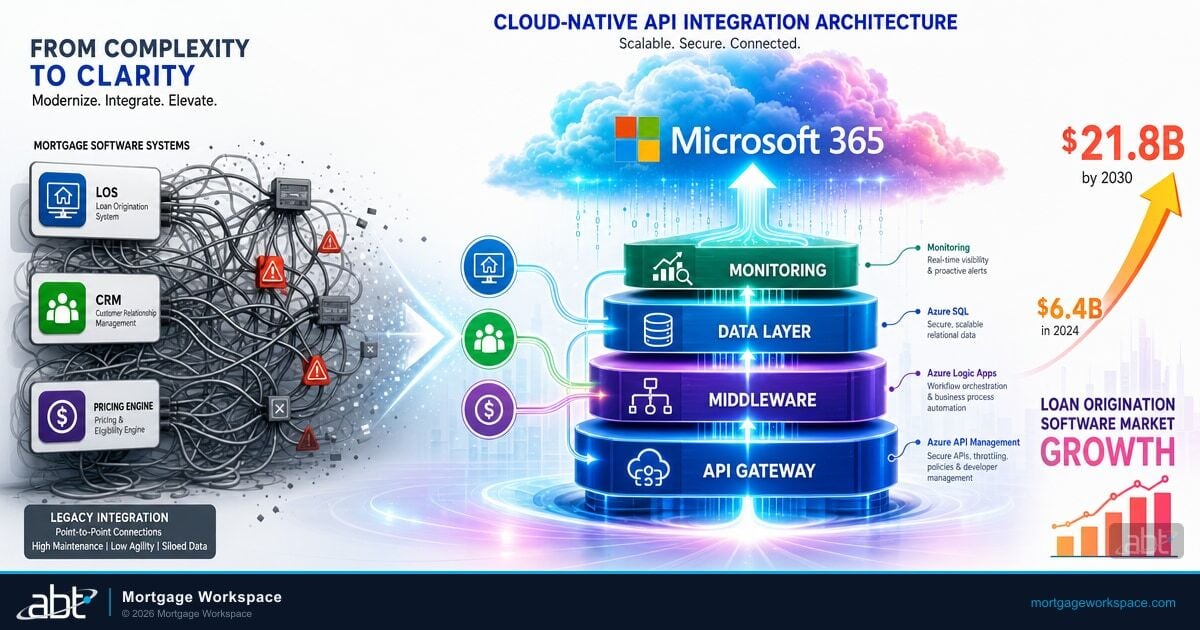
In This Article
- What Manual Pricing Actually Costs Your Operation
- How Real-Time Market Integrations Work in Encompass
- Five Benefits of Real-Time Encompass Mortgage Pricing
- MortgageExchange: The Integration Layer Between Encompass and Pricing Engines
- Setting Up Real-Time Pricing: What to Plan For
- The Pricing Engine Landscape: ICE PPE and Beyond
- Mortgage BI for Margin Tracking and M365 Guardian for Security
- Frequently Asked Questions
Lender Price launched the first cloud-native, AI-driven pricing engine in early 2026, using natural language processing to let secondary market teams write pricing rules in plain English instead of complex spreadsheet formulas. That product exists because the industry has a pricing accuracy problem: when your Encompass mortgage pricing relies on manual rate sheet uploads, every delay between market movement and system update is a window for quoting stale rates.
A few basis points in either direction can win or lose a borrower. Quote 6.75% when a competitor pulls live data and shows 6.625%, and the borrower walks. Quote below the actual investor price, and you absorb the margin hit or face a buyback. ICE Mortgage Technology's 2024 ROI study found that Encompass users see a $1,056 increase in gross profit per loan through optimized workflows, and real-time pricing integration is one of the highest-impact optimizations available.
This guide covers how real-time market integrations work inside Encompass, what they replace, how MortgageExchange connects the pieces, and how Mortgage BI and M365 Guardian round out the picture for a lock desk that runs on live data.
What Manual Pricing Actually Costs Your Operation
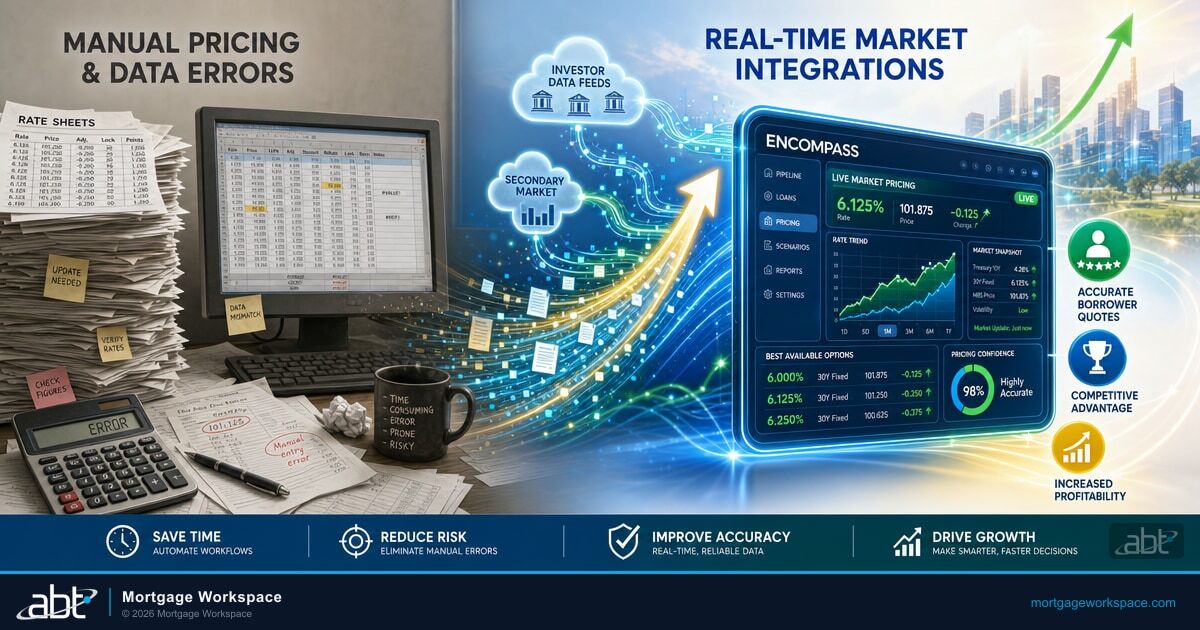
Manual pricing means downloading rate sheets, copying data into spreadsheets, and uploading numbers into Encompass, often before the first loan officer arrives at their desk. By the time that process finishes, rates may have already moved.
The operational costs break down into four categories:
- Pricing lag: Every hour between a market rate change and your Encompass update is an hour where your team quotes outdated numbers. In a volatile rate environment, that window can mean the difference between winning and losing a borrower.
- Copy-paste errors: Manual transfers from rate sheets to Encompass introduce data entry mistakes. A misplaced decimal point on an LLPA can reprice an entire loan.
- Team time drain: Lock desk analysts who spend their mornings uploading rate data are not spending that time on lock management, exception pricing, or strategic secondary market decisions.
- Compliance exposure: Outdated pricing can trigger re-disclosures when rates change between initial quote and lock. Worse, pricing that does not align with investor guidelines can result in buyback demands.
These are not edge cases. They happen daily at lending operations that still depend on manual pricing workflows. The fix is straightforward: automate the data feed so Encompass always reflects current market conditions.
How Real-Time Market Integrations Work in Encompass
Real-time market integrations are automated data feeds that deliver current pricing from investors, GSEs, and secondary markets directly into your Encompass system. They replace manual rate sheet uploads with API-based connections that keep your pricing engine synchronized with the market.
Here is what flows through these integrations:
- Daily interest rate changes from investors
- Price adjustments and loan-level price adjustments (LLPAs)
- Investor matrices and available lock periods
- Product eligibility updates and guideline changes
- Best execution analysis across multiple investors
The data flows through secure API connections between your pricing engine and Encompass. When rates change, your system reflects those changes automatically. When an investor updates guidelines, the new rules are already factored into loan scenarios before your team runs them.
ICE Mortgage Technology's own Product and Pricing Engine (PPE) provides this integration natively within Encompass. Third-party pricing engines like Lender Price, Mortech (Zillow), and Optimal Blue also offer Encompass integrations with varying depths of bi-directional data transfer.
Five Benefits of Real-Time Encompass Mortgage Pricing
1. Accurate Borrower Quotes on Every Loan
Real-time integrations eliminate pricing lag. Your loan officers quote current rates, not yesterday's numbers. In competitive purchase markets where multiple lenders are courting the same borrower, pricing accuracy is often the deciding factor.
2. Competitive Advantage in Rate-Sensitive Markets
When your competitor pulls live investor data and you are working from this morning's rate sheet, you lose on speed and accuracy. Real-time pricing lets your lock desk respond to market movements instantly, offering borrowers the best available terms at the moment they are ready to lock.
3. Recovered Team Capacity
Eliminating manual rate sheet uploads frees your lock desk and secondary market teams to focus on strategic work: managing hedge positions, analyzing execution options, and handling pricing exceptions. That is time shifted from data entry to revenue-generating decisions.
4. Reduced Compliance Risk
Pricing that stays aligned with current investor guidelines reduces the chance of re-disclosures, tolerance violations, and buyback demands. When a rate lock is submitted against expired pricing, the loan may need to be re-disclosed or repurchased. Real-time data eliminates that risk at the source.
5. Better Borrower Experience
When a borrower calls ready to lock, your loan officer pulls up live pricing and confirms the rate on the spot. No delays, no callbacks, no "let me check and get back to you." That responsiveness builds trust and closes more loans. See also our breakdown of The Economics of Mortgage Loan Platforms.
MortgageExchange: The Integration Layer Between Encompass and Pricing Engines
MortgageExchange is the integration layer that connects Encompass to real-time pricing engines, investor data feeds, and secondary market systems. Most lenders sit on a stack that wants to talk to itself but cannot: Encompass holds the loan, ICE PPE or Lender Price holds the pricing, investor portals hold the rate sheets, and a core banking system holds the customer record. MortgageExchange is the connective tissue that ties those systems together so the lock desk works from one truth instead of reconciling four.
On the pricing side, MortgageExchange normalizes the inbound feeds. Rates from ICE PPE, Lender Price, Mortech, Optimal Blue, and direct investor APIs all arrive in different shapes. MortgageExchange translates them into Encompass-ready records, applies the firm's pricing rules and LLPA overlays, and writes the result back into Encompass field by field. When an investor publishes a mid-day rate change, MortgageExchange catches it, validates it against the firm's guidelines, and updates the loan record without anyone touching a spreadsheet. That same integration layer also writes the lock confirmation back to the investor and feeds the priced loan into the firm's hedging and best-execution workflows. ABT has been building these mortgage interfaces for over 25 years across 750+ financial institutions, so the pricing integration arrives pre-tuned for the LOS quirks, investor formats, and lock desk workflows that lenders actually run.
Setting Up Real-Time Pricing: What to Plan For
Implementing real-time pricing integrations requires planning across technology, compliance, and team workflow. Here is the sequence that works:
Choose Your Pricing Engine Partner
Select a pricing engine with a proven Encompass integration. ICE PPE is the native option. Third-party engines like Lender Price, Mortech, and Optimal Blue each offer different strengths in investor coverage, analytics depth, and capital markets tools. Evaluate based on your investor mix and secondary market strategy.
Map Your Investor Data Feeds
Identify every investor whose pricing data needs to flow into Encompass. Document rate sheet formats, update frequencies, and any investor-specific pricing rules. This mapping determines how many API connections your integration requires.
Configure Security and Access Controls
Pricing data feeds must travel over encrypted connections with proper authentication. Set role-based access so only authorized users can view or modify pricing configurations. Document your security controls for SOC 2 and regulatory audits.
Test Before Going Live
Run the integration in parallel with your manual process for at least two weeks. Compare automated pricing against manual rate sheets to verify accuracy. Test scenarios including volatile market days, investor guideline changes, and lock extension requests.
Train Your Lock Desk Team
Your lock desk staff needs to understand how the integration works, how to handle exceptions, and what to do if the automated feed encounters an error. Train them on the new workflow before retiring the manual process.
The Pricing Engine Landscape: ICE PPE and Beyond
The mortgage pricing technology space is evolving rapidly. ICE Mortgage Technology's PPE provides seamless Encompass integration as a native solution. It supports instant rate quotes, lock management, and investor delivery from within the Encompass interface. Our guide to Mortgage Software Integration with Cloud Technology goes deeper on this.
Third-party options are expanding as well. Lender Price offers AI-driven pricing with natural language rule creation. Mortech's Marksman provides bi-directional data transfer with historical pricing, lock notifications, and change of circumstance support. Optimal Blue delivers broad investor coverage with analytics and hedging tools.
With ICE's SDK sunset deadline at December 31, 2026, any pricing integration using SDK-based connections must migrate to API-based architecture. API integrations offer faster data transfer, lower maintenance costs, and alignment with ICE's platform direction.
The choice depends on your investor coverage needs, secondary market strategy, and existing technology stack. All major engines support Encompass integration, but the depth of that integration varies.
Mortgage BI for Margin Tracking and M365 Guardian for Security
Real-time pricing solves the data-freshness problem. Two adjacent problems still need an answer once the feeds are live: knowing whether your margins are holding up, and keeping the whole stack secure.
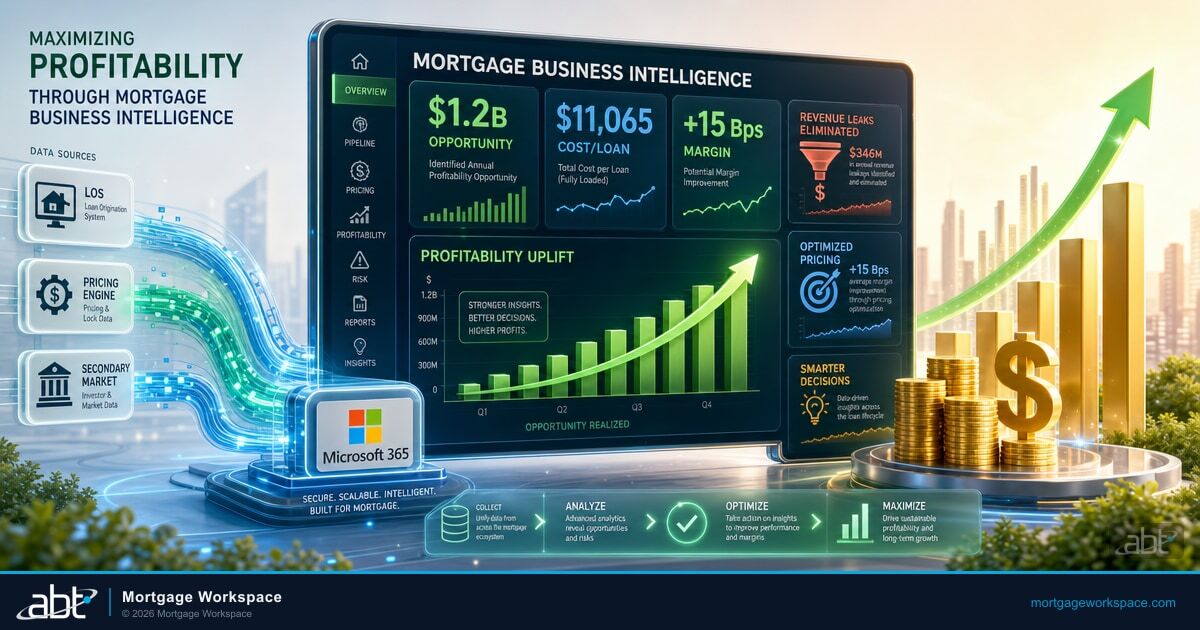
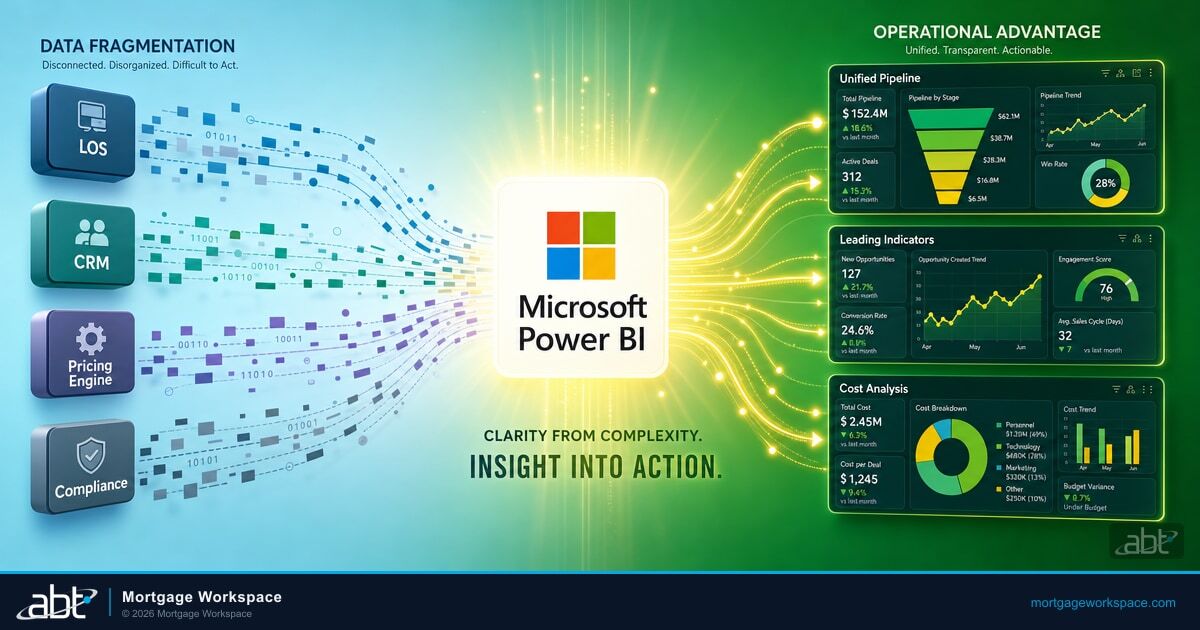
Mortgage BI dashboards for pricing margin tracking. Once pricing flows automatically from investors into Encompass, the next question for secondary market leaders becomes: are we still pricing for the margin we need? Mortgage BI surfaces the answer in dashboards that pull from the priced loan records MortgageExchange writes into Encompass. The dashboards show margin per loan by investor, by product, by branch, and by loan officer, and they flag drift the moment it shows up. A lock desk that ran on manual rate sheets used to find out at month-end that a certain investor's pricing had compressed the margin by 18 basis points. Mortgage BI shows it on the dashboard the morning after the trend starts, so the secondary team can renegotiate or shift volume before the quarter closes.
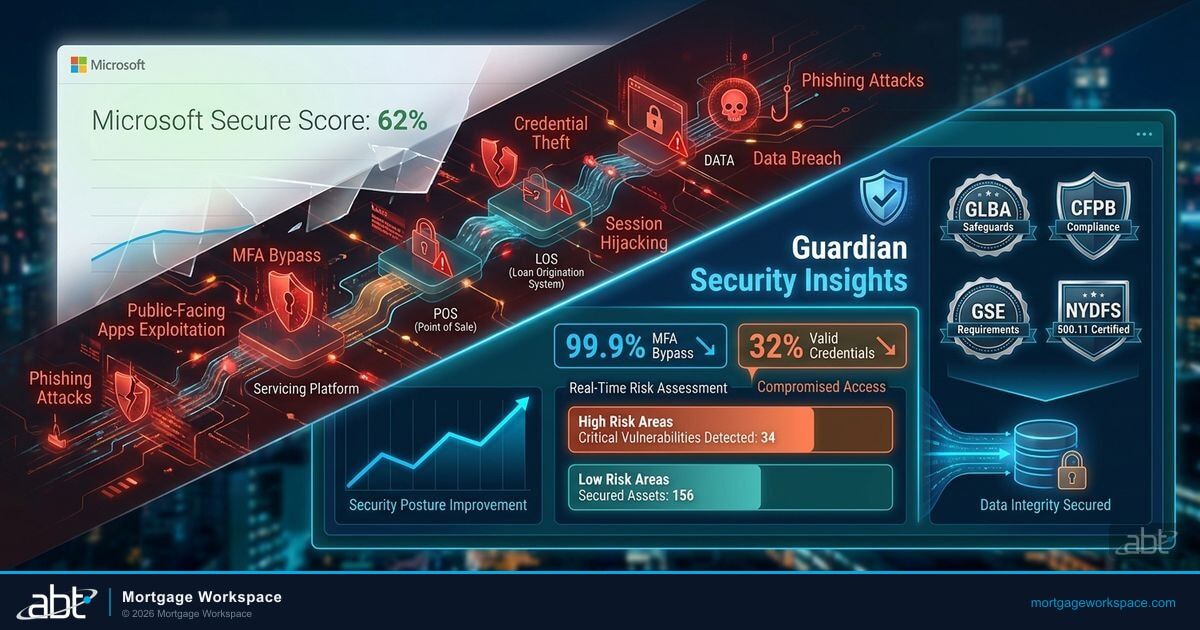
M365 Guardian for security around the pricing stack. A real-time pricing integration touches investor APIs, borrower data inside Encompass, and the firm's secondary market communications. That surface needs a security operating model, not just a perimeter firewall. M365 Guardian is ABT's operating model on top of Microsoft 365 for mortgage companies. ABT manages the firm's Microsoft 365 tenant under a Tier-1 Direct-Bill CSP relationship and layers Guardian over Microsoft Entra ID, Defender, Purview, Intune, and Sentinel to harden the identity, device, communication, and audit surfaces that the pricing integration depends on. Conditional Access keeps the lock desk's pricing tools off unmanaged devices. Defender for Office 365 and Defender for Endpoint catch the impersonation attempts that target loan officers and underwriters. Purview holds the audit trail that regulators look for when an investor disputes a lock. Sentinel aggregates the signals so the security team sees one incident view, not seven. Guardian is what keeps the data feeding the integration from becoming the next breach disclosure. We cover Cloud Migration for Mortgage Companies in a companion piece.
Get an Encompass Pricing Integration Built for Your Lock Desk
Access Business Technologies builds MortgageExchange-powered pricing integrations for mortgage companies running Encompass, layers Mortgage BI dashboards for margin tracking, and manages the Microsoft 365 tenant underneath with M365 Guardian. A 30-minute conversation maps your current pricing workflow, identifies the investor feeds that need to flow through MortgageExchange, and outlines what a managed deployment would cover. No commitment, no quote, no obligation.
Frequently Asked Questions
A real-time market integration is an automated API connection that delivers current investor pricing, rate changes, LLPAs, and product eligibility data directly into your Encompass system. It replaces manual rate sheet uploads so your pricing engine always reflects current market conditions without human intervention or data entry. MortgageExchange is the integration layer that normalizes feeds from ICE PPE, Lender Price, Mortech, Optimal Blue, and direct investor APIs and writes the priced loan record back into Encompass.
Real-time pricing keeps your Encompass system aligned with current investor guidelines and market rates. This reduces re-disclosure risk from expired pricing, prevents tolerance violations caused by rate changes between quote and lock, and minimizes buyback exposure from loans priced against outdated investor matrices. Automated pricing creates an auditable data trail that Microsoft Purview holds on the firm's behalf, which is what an investor or a regulator looks for when a lock is disputed.
ICE Mortgage Technology's own Product and Pricing Engine (PPE) provides native Encompass integration. Third-party options include Lender Price, which offers AI-driven pricing with natural language rule creation; Mortech by Zillow, which provides bi-directional data transfer and lock desk tools; and Optimal Blue, which delivers broad investor coverage with analytics capabilities. MortgageExchange connects all four engines to Encompass so the lock desk works from one normalized view, regardless of which investor pricing arrives from which engine.
Implementation typically takes four to eight weeks depending on the number of investor feeds, complexity of your pricing rules, and testing requirements. Plan for at least two weeks of parallel operation where automated pricing runs alongside your manual process to verify accuracy before fully transitioning your lock desk to the live integration. With MortgageExchange, ABT brings prebuilt connectors for the most common pricing engines and investor APIs, which compresses the integration timeline compared to a from-scratch build.
Yes. Any pricing integration using SDK-based connections must migrate to API-based architecture before ICE Mortgage Technology's December 31, 2026 deadline. API-based pricing integrations run faster and cost less to maintain than SDK alternatives. ICE reports that clients who completed the API transition see an average benefit of $149 per loan from reduced latency. MortgageExchange is API-first, so lenders that move their pricing layer through MortgageExchange are already aligned with ICE's post-SDK platform direction.
Mortgage BI sits on top of the priced loan records to give secondary market leaders dashboards for margin per loan, per investor, per product, and per branch. The dashboards flag margin drift the morning it starts rather than at month-end. M365 Guardian is ABT's operating model on top of the Microsoft 365 tenant that the lock desk and secondary team work inside. ABT manages the tenant under a Tier-1 Direct-Bill CSP relationship and layers Guardian over Microsoft Entra ID, Defender, Purview, Intune, and Sentinel to keep the pricing stack secure, audit-ready, and aligned with the firm's incident response program.