In This Article
- What Modern Loan Origination Systems Deliver Beyond Digitization
- The 2026 LOS Landscape: Encompass, Calyx, Empower, BytePro
- Why MortgageExchange Is the Integration Layer Underneath the LOS
- Calyx PointCentral: The ABT-Hosted Modern LOS Option
- Why Cloud-Native LOS Platforms Win on Cost and Scale
- AI and Automation in Loan Origination Systems
- The Compliance Engine Your LOS Must Include
- Choosing the Right LOS for Your Operation
- Frequently Asked Questions
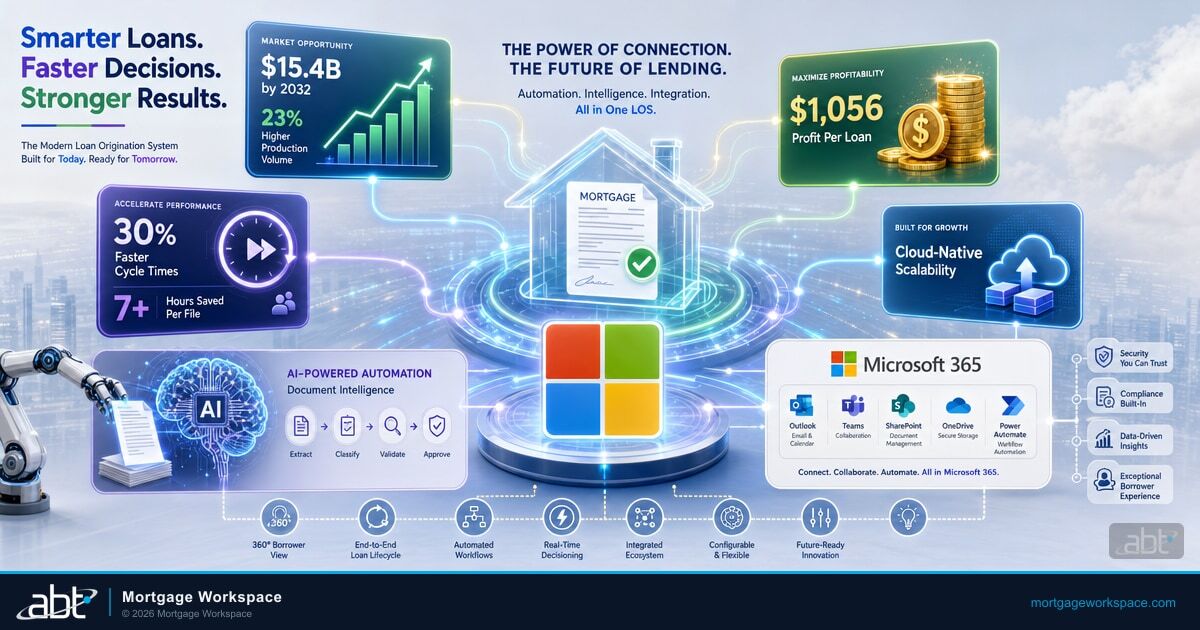
The global loan origination system market hit $6 billion in 2024 and is projected to reach $15.4 billion by 2032 at a 12.5% CAGR. U.S. financial institutions invested over $2.5 billion in AI-enabled underwriting modules in 2024 alone, and more than 70% of large banks now run cloud-based LOS platforms. On February 25, 2026, Dark Matter Technologies announced it became the first LOS provider to support AI agents inside the Empower platform using Model Context Protocol.
These are not incremental shifts. The LOS market is bifurcating into platforms that automate decisions and platforms that merely digitize data entry. Lenders on modern systems report a $1,056 increase in gross profit per loan and 23% higher production volume without adding headcount. Lenders on legacy systems are paying more per loan, closing slower, and absorbing compliance risk that automated platforms handle in real time.
Your loan origination system is the central operating system for your entire lending operation. If it drags, every other investment you make delivers diminished returns. The harder problem most mortgage executives miss: the LOS by itself is only half the answer. The other half is the integration layer underneath that connects the LOS to your core banking system, AUS, pricing engine, CRM, and document repository. Access Business Technologies has been building that integration layer for mortgage lenders since 1999, and it is the reason a Tier-1 Microsoft Cloud Solution Provider with 750+ financial institution customers ends up in conversations about loan origination strategy.
Why ABT Talks to Mortgage Lenders About LOS Strategy
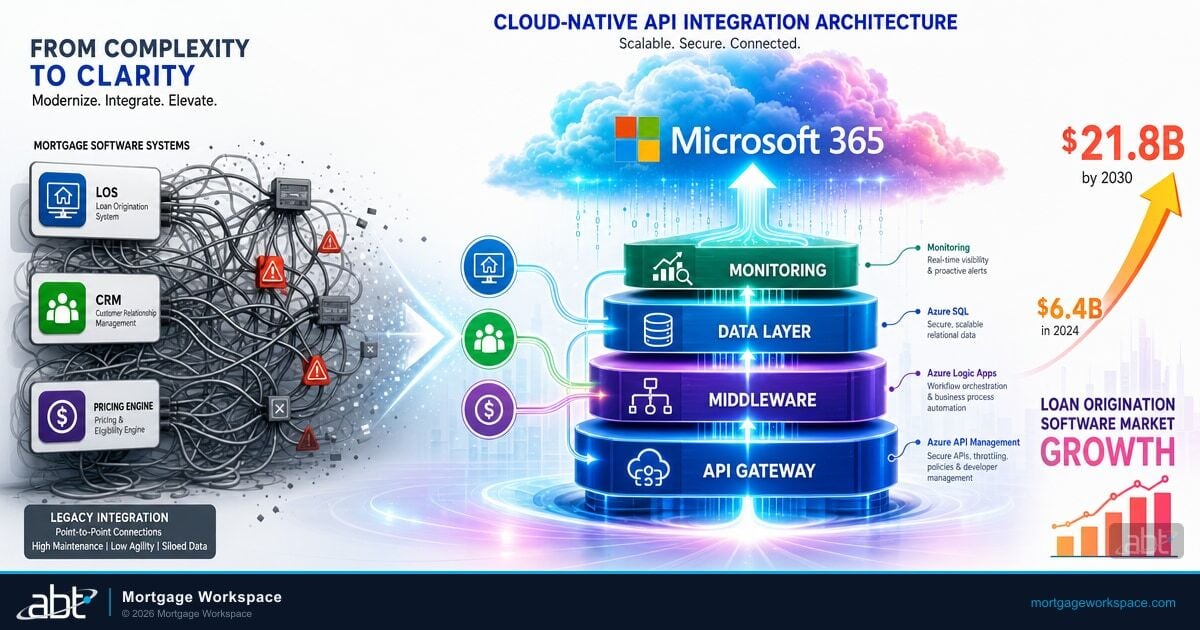
- MortgageExchange is ABT's custom interface layer connecting any major LOS (Encompass, Calyx Path, Empower, BytePro) to core banking systems, AUS engines, pricing engines, CRM, and document management. When a lender swaps LOS, MortgageExchange protects the downstream connections so the migration is bounded instead of company-wide.
- Calyx PointCentral is the modern LOS option ABT hosts on Microsoft Azure in a dedicated tenant per lender, operated under ABT's Tier-1 Direct-Bill CSP relationship with Microsoft. It is the option for mortgage operations that want a current-generation LOS without owning the infrastructure.
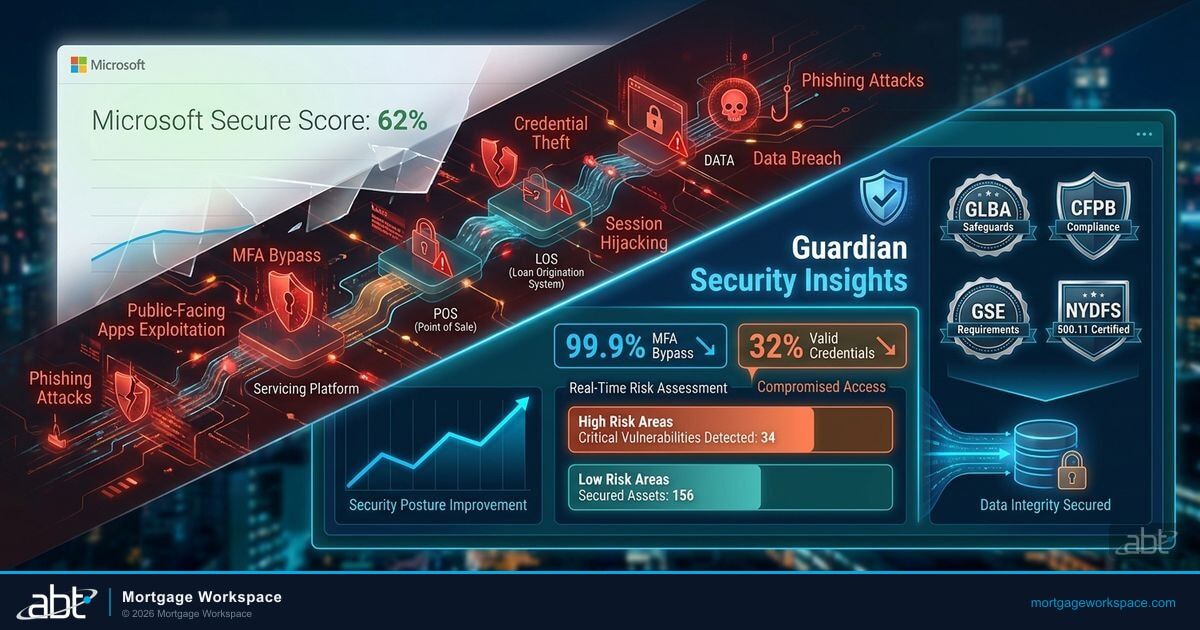
- Microsoft 365 + Guardian operating model wraps the productivity and security layer (Outlook, Teams, SharePoint, Entra ID, Defender, Purview) that every LOS depends on but does not provide. ABT manages that layer across 750+ banks, credit unions, and mortgage companies.
What Modern Loan Origination Systems Deliver Beyond Digitization
A loan origination system is the centralized platform where loan officers, processors, underwriters, and closers collaborate to move a mortgage from application through closing. Going paperless was the first generation. Modern LOS platforms do something different: they automate decisions, not just data entry.
The distinction matters. A digitized workflow still requires a human to read a W-2, enter the numbers, cross-reference guidelines, and route the file. An automated workflow uses OCR to extract data from the W-2, validates it against IRS records, checks investor guidelines, and routes the file without a processor touching it.
That shift from digitization to automation is driving measurable results:
- 30% reduction in origination cycle times from application to close
- $1,056 more gross profit per loan for lenders on modern platforms
- 23% higher loan production volume without increasing headcount
- 7+ hours saved per file through automated document processing and data extraction
These come from production lenders running current-generation platforms against real loan files. The hard part is not the LOS itself. The hard part is keeping every downstream system fed correctly when the LOS swaps, upgrades, or adds a new module.
The 2026 LOS Landscape: Encompass, Calyx, Empower, BytePro
The U.S. residential mortgage LOS market in 2026 runs on a small number of platforms that each cover a different operational shape. Knowing which one fits your operation is the first decision. Knowing how to integrate it without rebuilding your downstream stack is the harder second decision.
| Platform | Vendor | Best Fit | Integration Profile |
|---|---|---|---|
| Encompass | ICE Mortgage Technology | High-volume retail lenders, IMBs, banks running 1,000+ loans/month | Deep ecosystem, transitioning from SDK to Encompass Partner Connect (EPC) APIs. Monthly fees on remaining SDK integrations begin May 2026. |
| Calyx Path | Calyx Software | Brokers, small-to-mid lenders, credit unions running 50-500 loans/month | Cloud-native, modern API surface, lower implementation cost. PointCentral is the hosted enterprise variant. |
| Empower | Dark Matter Technologies (formerly Black Knight) | High-volume retail and wholesale lenders, depository banks | Enterprise platform, recently added AI agent support inside the LOS via Model Context Protocol (February 2026). |
| BytePro | Byte Software | Small-to-mid brokers, smaller IMBs | Long-standing broker platform, on-premise legacy with cloud migration paths through partners. |
| MeridianLink Mortgage | MeridianLink | Credit unions, community banks running consumer and mortgage lending together | Modular consumer-lending platform, integrates tightly with MeridianLink Opening and core banking systems. |
| nCino Mortgage | nCino | Banks running commercial and consumer lending on a single Salesforce-based platform | Built on Salesforce, integrates AUS Smart Tasks for plain-language underwriting findings. |
The pattern in that table is that no single LOS covers every operational shape. Most mortgage operations end up evaluating two or three platforms against their actual workflow before settling. The decision is rarely about feature parity. It is about which platform's strengths match your highest-volume loan types, your channel mix, and your downstream system landscape.
The Encompass SDK Sunset
Encompass by ICE Mortgage Technology supports roughly 40% of U.S. residential mortgage volume. ICE's technology decisions ripple across the entire industry.
The SDK-to-API transition is one of those decisions. Encompass Partner Connect (EPC) replaces the legacy software development kit that third-party vendors used for years to integrate with Encompass. The timeline:
- November 2025: Grace period began for SDK users
- May 2026: Monthly fees apply to remaining SDK integrations
For lenders, every integration point needs evaluation. Credit pulls, appraisal ordering, title services, document preparation, fraud detection, and AUS submissions that run through SDK connections must migrate to API-based EPC connections. Vendors who have not completed this migration become liabilities in your workflow.
The upside is real. API-based integrations are more reliable, more secure, and easier to maintain. They enable real-time data exchange, reduce manual re-entry, and open automation capabilities that SDK architecture could not support.
Why MortgageExchange Is the Integration Layer Underneath the LOS
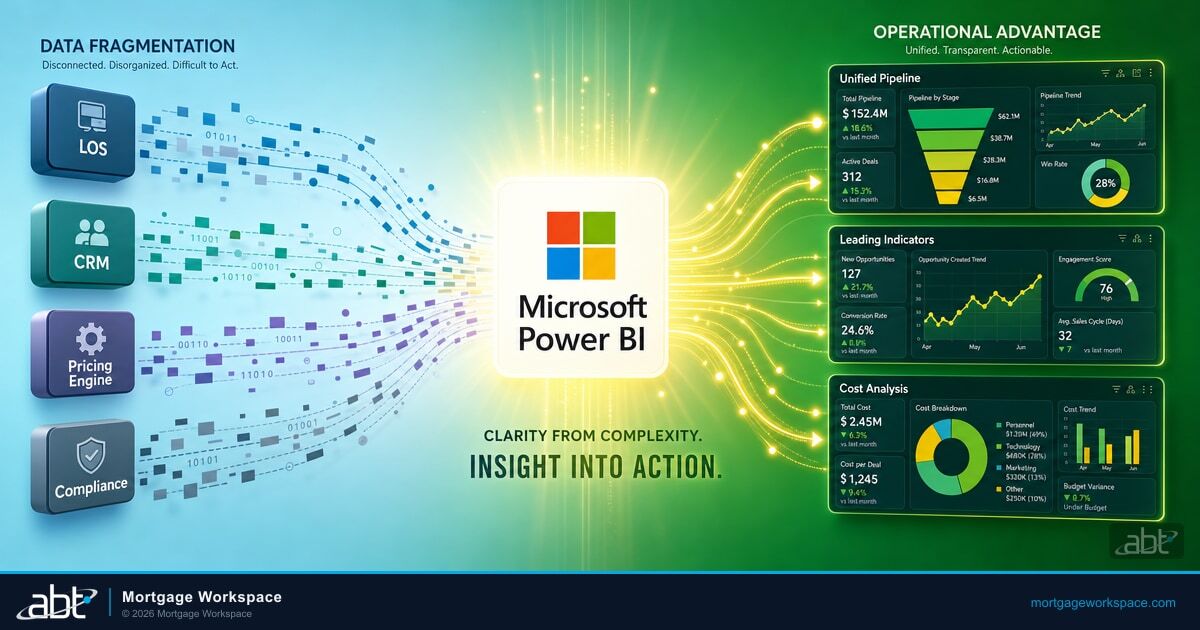
The LOS is only the visible surface of a mortgage operation. Underneath it sits a network of connections that have to keep working every minute of the business day. Credit bureau pulls. Automated underwriting submissions to Desktop Underwriter and Loan Product Advisor. Appraisal ordering through Mercury, Reggora, or AppraisalPort. Title services. Hazard insurance lookups. Document preparation through Doc Magic or IDS. Investor delivery to Fannie Mae, Freddie Mac, Ginnie Mae, or private aggregators. Pricing engines like Optimal Blue or LoanSifter. Core banking system updates for credit unions and depository banks. CRM data flowing back to Velocify, Total Expert, or Salesforce. Document management archiving to a long-term repository for compliance.
Every one of those connections is a custom integration. The LOS provides hooks, but the hooks are not the integration. The integration is the code that translates the LOS's data model into the data model the downstream system expects, handles authentication, retries failed calls, logs the audit trail, and surfaces exceptions when something breaks. The same principle applies to the POS-to-LOS connection on the front end of the workflow.
When a lender swaps LOS, every one of those integrations has to be rebuilt against the new platform's APIs unless there is an abstraction layer in between. That is what MortgageExchange is. ABT operates MortgageExchange as the integration layer that sits between the LOS (Encompass, Calyx Path, Calyx PointCentral, Empower, BytePro, MeridianLink, nCino) and every downstream system the LOS feeds. The lender's investment in the downstream connections moves with the lender across LOS migrations, rather than being lost every time a vendor decision changes.
An IMB closing 300 loans per month decides to move from BytePro to Encompass. Every credit pull, appraisal order, title service connection, AUS submission, doc prep call, and investor delivery integration has to be rebuilt against Encompass APIs. The migration takes 9 months, requires 4 vendor SOWs, and the operation runs both systems in parallel during the cutover. Three integrations break in production. The CFO sees the integration rebuild line item and cannot understand why "switching LOS" cost $400K in vendor work that was not in the LOS quote.
Same IMB, same migration from BytePro to Encompass. The downstream connections (credit, appraisal, title, AUS, doc prep, investor delivery) all run through MortgageExchange. The integration layer's job during the migration is to point at the new LOS instead of the old one. The lender swaps the LOS in 90 days, the downstream stack keeps running, and the integration work is bounded to the LOS connector rather than every connection in the operation. The CFO sees one migration line item instead of fourteen.
The strategic point: a mortgage operation's real switching cost is not the LOS. It is the network of integrations underneath. A lender that has built that network through MortgageExchange keeps optionality on the LOS itself, which is the bigger long-term lever as the platforms continue to evolve.
Calyx PointCentral: The ABT-Hosted Modern LOS Option
For mortgage operations that want a current-generation LOS without owning the infrastructure, Calyx PointCentral is the enterprise variant of the Calyx Path platform. ABT hosts PointCentral on Microsoft Azure in a dedicated tenant per lender, operated under ABT's Tier-1 Direct-Bill Cloud Solution Provider relationship with Microsoft.
The architecture matters for three reasons that show up in regulatory exams and operational reviews.
Dedicated Azure tenant per lender. Each customer's PointCentral environment runs in its own Azure subscription. The lender's loan data, borrower NPI, and audit logs sit inside an environment that is logically and contractually isolated from every other ABT-hosted PointCentral customer. Examiners reviewing third-party service-provider risk under FFIEC and state mortgage-banker exams can see the segmentation in writing and in the architecture diagram.
Microsoft Azure as the cloud platform. Azure carries the SOC 1, SOC 2, SOC 3, ISO 27001, ISO 27018, PCI DSS, HIPAA, and FedRAMP attestations that examiners and audit teams already know. The lender does not have to evaluate a custom datacenter operated by a small vendor. The lender evaluates Microsoft's compliance posture, which Microsoft publishes through the Microsoft Service Trust Portal, and then evaluates how ABT operates the tenant on top of that platform.
ABT operates the environment as the partner of record. The lender owns the Calyx PointCentral license and the loan data. ABT runs the Azure subscription, applies patches, monitors the environment, manages backup and disaster recovery posture, and integrates the LOS to the downstream stack through MortgageExchange. The lender's IT team does not maintain servers, virtual machines, or Azure subscriptions for this purpose. The CFO sees a single per-loan or per-user monthly operating expense rather than a capital-expenditure cycle.
The combined picture for a mortgage operation on the ABT stack: Calyx PointCentral as the modern LOS, hosted on Microsoft Azure in a dedicated tenant; MortgageExchange as the integration layer connecting the LOS to credit bureaus, AUS engines, title services, document prep, investor delivery, and the core banking or accounting system; Microsoft 365 and the M365 Guardian operating model running productivity, email, collaboration, identity, and endpoint security across the lender's user base. The lender owns the loan data and the customer relationships. ABT operates the technology layer underneath.
Why Cloud-Native LOS Platforms Win on Cost and Scale
More than 70% of new LOS implementations are cloud-based. The mortgage industry's cyclical nature makes this the practical choice.
When rates drop and refi volume spikes, cloud platforms scale automatically. Lenders handle 30% higher application volumes during peak periods without infrastructure strain. When volume contracts, costs shrink proportionally. On-premise systems cannot offer this elasticity without significant capital expenditure.
Cloud LOS platforms deliver faster regulatory updates. When GSE guidelines change, cloud vendors push updates to all users simultaneously. On-premise installations require manual patches, testing cycles, and deployment windows that delay compliance.
The cost structure favors cloud. SaaS-based platforms eliminate server hardware, dedicated IT maintenance staff, and upgrade cycles that consume weeks of internal resources. Total cost of ownership drops substantially when you factor in infrastructure, staffing, and update cycles.
The remaining objections (data security, latency, customization) have been resolved by modern platforms offering SOC 2 compliance, sub-second response times, and configurable workflows that match or exceed on-premise flexibility. For a lender running Calyx PointCentral on Azure under ABT's CSP relationship, the cloud question is not whether to migrate. The cloud question is which vendor's hosted environment to run the LOS in, and what the integration layer underneath looks like.
AI and Automation in Loan Origination Systems
Every LOS vendor markets AI capabilities. Separating meaningful automation from marketing noise requires understanding where AI delivers value in the origination workflow.
Document Intelligence
The highest-impact AI application in loan origination is automated document recognition and data extraction. ICE Mortgage Analyzers use intelligent document recognition to identify document types, extract data, compare it against loan file data, and present only exceptions for human review. This eliminates the "stare and compare" work that consumes processor hours.
AI Agents Inside the LOS
Dark Matter Technologies launched AI agent support inside the Empower LOS in February 2026 using Model Context Protocol. Business teams build and manage agents that interact with the loan system through a secure gateway. Agents can retrieve data, process documents, and execute tasks while maintaining full auditability and compliance. This is the first LOS provider to support this capability in production.
Automated Underwriting Integration
Modern LOS platforms provide native integration with Desktop Underwriter and Loan Product Advisor. nCino's AUS Smart Tasks interpret underwriting findings into plain-language summaries with clear next steps, letting loan officers work through conditions efficiently rather than interpreting pages of findings manually.
Intelligent Workflow Routing
Decision engines route files based on risk profiles, complexity, and loan characteristics. Simple, clean files move through automated workflows with minimal human touch. Complex files (self-employment income, non-QM products, investment properties) route to experienced staff. This exception-based model maximizes throughput while maintaining quality.
Where AI Falls Short
AI cannot yet handle nuanced judgment calls on complex cases. Self-employed income calculation, property condition evaluation, and guideline interpretation for edge cases still require human expertise. The lenders getting the best results use AI to handle volume and free their best people for work that requires judgment.
The Compliance Engine Your Loan Origination System Must Include
Mortgage compliance touches every stage of origination. TRID mandates precise timing and content for Loan Estimates and Closing Disclosures. HMDA requires accurate data collection and reporting. Fair lending laws demand consistent treatment across all borrower demographics. State regulations add another layer that varies by jurisdiction.
Modern LOS platforms build compliance into the workflow rather than bolting it on after the fact. Automated tolerance checks prevent loans from moving forward with TRID violations. HMDA data collection happens at intake rather than as a post-closing scramble.
The compliance advantage of a well-configured LOS is measurable. Automated checks catch errors that manual reviews miss. Audit trails document every decision and data change. When examiners arrive, the LOS provides documentation without weeks of file pulling.
Regulatory changes are accelerating. The Homebuyers Privacy Protection Act (March 2026) restricts trigger lead usage. Fannie Mae's cybersecurity requirements demand formal InfoSec programs and 36-hour breach reporting. A LOS that cannot adapt quickly to regulatory changes becomes a compliance risk itself. The Microsoft 365 productivity and security layer wrapped around the LOS matters here too: examiners increasingly ask about the broader information-security program, not just the LOS itself.
Choosing the Right LOS for Your Lending Operation
The right LOS depends on your lending model, volume, channel mix, and growth trajectory. There is no universal best choice, but there are clear evaluation criteria.
High-volume retail lenders: Encompass and Dark Matter's Empower lead the market with deep functionality, extensive integrations, and proven scale. The tradeoff is complexity and cost. These platforms reward investment in configuration and training.
Brokers and small-to-mid-size operations: Cloud-native platforms like ARIVE, MeridianLink, and Calyx Path offer modern interfaces, lower total cost of ownership, and faster implementation. They trade enterprise depth for usability and speed. Calyx PointCentral is the enterprise variant for operations that want hosted infrastructure and a current-generation cloud platform.
Credit unions and community banks: Platforms like MeridianLink and nCino offer modular architectures that integrate with core banking systems and support member-centric workflows. The hidden cost of poor integration shows up most acutely in this segment, where the LOS, the core banking system, and the consumer-lending platform all have to feed each other in real time.
Any lender evaluating a new LOS: Start with a workflow audit. Map your actual day-to-day operations, not your ideal process. Evaluate platforms against that reality. A system that performs well in a demo but does not match your workflows will create more problems than it solves.
Key evaluation criteria:
How does the LOS connect to credit bureaus, AUS, title services, appraisal, document preparation, and investor delivery? Are those connections built into the platform, or do they require third-party vendors and custom integration work each time?
Can your operations team change workflows when business rules shift, or does every adjustment require a vendor engagement and a deployment window?
TRID tolerance checking, HMDA data collection at intake, fair-lending monitoring, audit-trail generation. The compliance layer must be in the workflow, not bolted on at closing.
Modern operations use eClosing for an increasing share of loans. The LOS needs to coordinate with the doc-prep platform, the notary platform, and the title services platform without manual handoffs.
Is the LOS on a modern API surface, or is it still tied to a legacy SDK? Encompass is the most visible example of this transition, but every platform has its own version of the question.
The LOS license is one line item. The integration work to connect it to everything downstream is the other line item, often larger. Evaluate both together.
Key Takeaway
The LOS is only half the answer. The integration layer underneath is the other half, and it is the part that determines whether the next LOS migration takes 90 days or 9 months. MortgageExchange protects the downstream connections so the LOS becomes a swappable component rather than an operation-wide rebuild every time. Calyx PointCentral hosted on Microsoft Azure under ABT's Tier-1 CSP relationship is the modern LOS option for mortgage operations that want a current-generation platform without owning the infrastructure. Together they give a mortgage lender real optionality on the LOS while keeping the operation running.
Map Your LOS and Integration Strategy With ABT
Whether you are evaluating a new LOS, planning a migration, or trying to bound the integration cost of a swap you already decided to make, a 30-minute conversation with an ABT specialist maps your current stack, surfaces the integration risks examiners and CFOs will ask about, and outlines what an ABT-operated environment (MortgageExchange, optionally Calyx PointCentral on Azure, Microsoft 365 and Guardian) would cover.
Frequently Asked Questions
A loan origination system (LOS) is the centralized software platform where mortgage professionals process applications from intake through closing. It coordinates document collection, data verification, automated underwriting, compliance checks, and investor delivery. Modern LOS platforms automate repetitive tasks and route exceptions to human reviewers, reducing cycle times by up to 30% and increasing gross profit per loan by over $1,000 compared to manual workflows. The LOS is only the visible surface, though. Underneath every LOS is a network of integrations to credit bureaus, AUS engines, title services, doc prep, investor delivery, and core banking systems that has to keep working every minute of the business day.
MortgageExchange is Access Business Technologies' custom integration layer that sits between the LOS (Encompass, Calyx Path, Calyx PointCentral, Empower, BytePro, MeridianLink, nCino) and the downstream systems the LOS feeds: credit bureaus, automated underwriting systems, title services, appraisal platforms, document preparation, investor delivery, pricing engines, core banking systems, and CRM. When a lender swaps LOS, MortgageExchange protects the downstream connections so the migration is bounded to the LOS connector rather than a rebuild of every integration in the operation. The result is that a lender's investment in the downstream stack moves with the lender across LOS changes, instead of being lost every time the LOS vendor decision shifts.
Calyx PointCentral is the enterprise variant of the Calyx Path platform. Access Business Technologies hosts PointCentral on Microsoft Azure in a dedicated tenant per lender, operated under ABT's Tier-1 Direct-Bill Cloud Solution Provider relationship with Microsoft. Each customer's PointCentral environment runs in its own Azure subscription, with the lender's loan data, borrower NPI, and audit logs isolated from every other customer. The lender owns the Calyx license and the loan data. ABT runs the Azure subscription, applies patches, manages backup and disaster recovery, and integrates the LOS to the downstream stack through MortgageExchange. The lender's IT team does not maintain servers or virtual machines for this purpose. PointCentral fits mortgage operations that want a current-generation cloud LOS without owning the infrastructure underneath.
ICE Mortgage Technology is transitioning Encompass from its legacy SDK to API-based Encompass Partner Connect (EPC). Monthly fees apply to remaining SDK integrations starting May 2026. Every third-party integration using SDK connections must migrate to EPC, including credit pulls, appraisal ordering, title services, and document preparation. Lenders should audit their integration stack and verify vendor migration timelines before the deadline. Operations that route those connections through MortgageExchange handle the migration once at the integration layer rather than vendor-by-vendor across every downstream connection.
Cloud-native LOS platforms scale automatically during volume spikes, deliver regulatory updates simultaneously to all users, and eliminate hardware and maintenance costs. Lenders handle 30% more application volume during peaks without infrastructure strain. Over 70% of new LOS implementations are cloud-based, driven by lower total cost of ownership, faster deployment, and the cyclical nature of mortgage lending that demands elastic capacity. For lenders running Calyx PointCentral on Microsoft Azure under ABT's CSP relationship, the cloud LOS comes with a dedicated Azure tenant, ABT's operational management, and integration through MortgageExchange to the downstream stack.
AI delivers the highest value in document intelligence, automated underwriting interpretation, and workflow routing. Dark Matter Technologies launched the first AI agent support inside a production LOS in February 2026. Modern platforms use OCR and machine learning to extract and validate document data, translate underwriting findings into plain-language task lists, and route files based on complexity so experienced staff handle only the cases requiring judgment. AI does not yet handle nuanced judgment on complex cases (self-employment income, non-QM, property condition), so the operational pattern is to use AI for volume and free experienced staff for the work that requires judgment.
A mortgage LOS must include TRID tolerance checking, HMDA data collection at intake, fair-lending monitoring, and automated audit trails. The system should prevent compliance violations proactively rather than catching them post-closing. With new regulations like the Homebuyers Privacy Protection Act (March 2026) and Fannie Mae's cybersecurity requirements, the LOS must adapt to regulatory changes quickly through vendor-delivered updates. Examiners increasingly ask about the broader information-security program around the LOS too, which is where the Microsoft 365 layer (Entra ID, Defender, Purview) and ABT's Guardian operating model fit into the conversation.