In This Article
Freddie Mac's Loan Product Advisor users who fully adopted its data interface saw non-acceptable quality rates drop 40% compared to low-usage lenders. The difference wasn't better staff or more training. It was cleaner data flowing through connected systems.
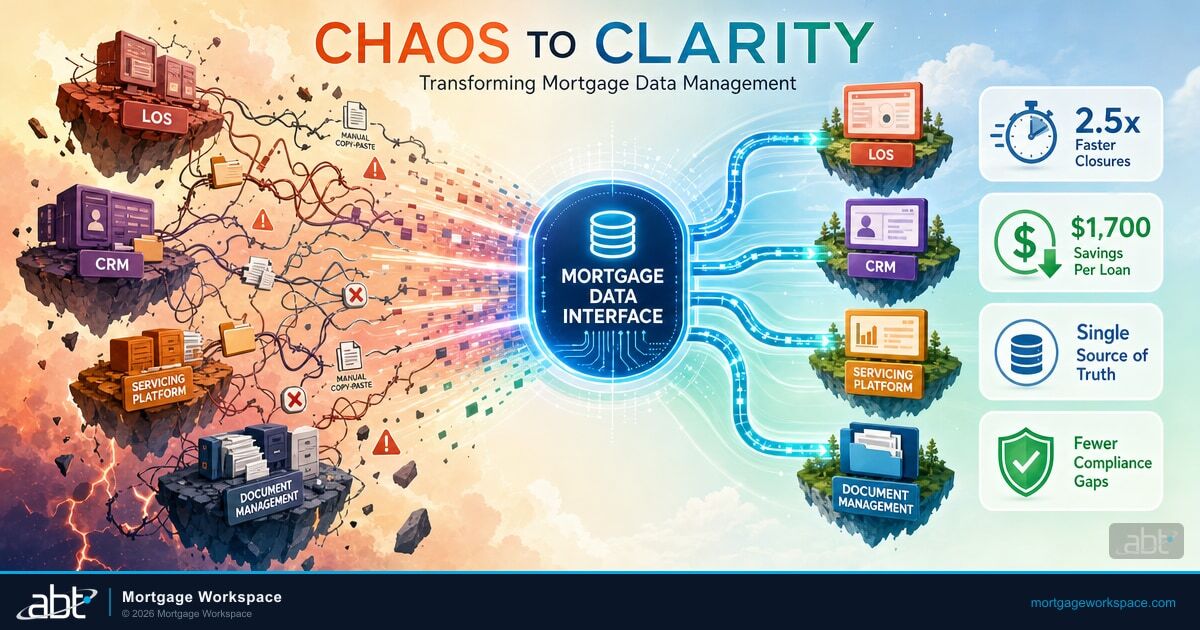
Most mortgage operations still run on disconnected platforms. Your LOS holds loan data. Your CRM tracks borrower communication. Your servicing platform manages post-close. When these systems don't talk to each other, your team spends hours copying data between screens instead of closing loans.
Mortgage data interfaces fix that problem. Here's how they work and what they change.
What Are Mortgage Data Interfaces?
A mortgage data interface is a connection layer between two or more software systems in your lending operation. It moves loan data, borrower records, and compliance information between platforms without manual re-entry.
Think of it as plumbing. Your LOS, CRM, document management system, and servicing platform each hold pieces of the same loan file. A data interface connects those pipes so information flows automatically.
When a loan officer updates a borrower's employment status in your LOS, the data interface pushes that change to your CRM, your disclosure engine, and your underwriting queue. One entry. Every system updated.
MortgageExchange is built to handle exactly this kind of connection. It bridges LOS platforms, core banking systems, and CRMs so data flows between them without manual re-entry or file exports. For credit unions and mortgage lenders running multiple systems, it eliminates the gap between where data lives and where it needs to go. We cover Migration Myths Busted in a companion piece.
The Real Cost of Disconnected Mortgage Data
The average cost to originate a mortgage loan reached $11,800 in Q2 2025. A significant portion of that cost comes from manual data handling between disconnected systems.
Here's what disconnected data actually costs you:
- Duplicate entry time: Loan processors spend 20-30% of their day re-keying data that already exists in another system
- Error correction: A transposed digit in an income field triggers compliance reviews, delayed closings, and rework
- Compliance risk: When your disclosure engine pulls from stale data, your TRID timelines and fee tolerances break
- Lost capacity: Every hour spent copying data is an hour not spent on borrower communication or pipeline management
AI-powered document automation reduced verification time from 48 hours to 4 hours at lenders who adopted connected data interfaces. That's not incremental improvement. That's a category shift.
Three Benefits of Connected Mortgage Data
1. Single Source of Truth
When every system pulls from the same data source, your team stops arguing about which number is right. Loan amount, interest rate, borrower income, property value. One record. One version. Every department sees the same file.
This matters most during audits. GLBA, FTC Safeguards Rule, and state-level regulations require you to demonstrate data accuracy. A single source of truth makes that demonstration straightforward instead of a scramble.
2. Faster Pipeline Velocity
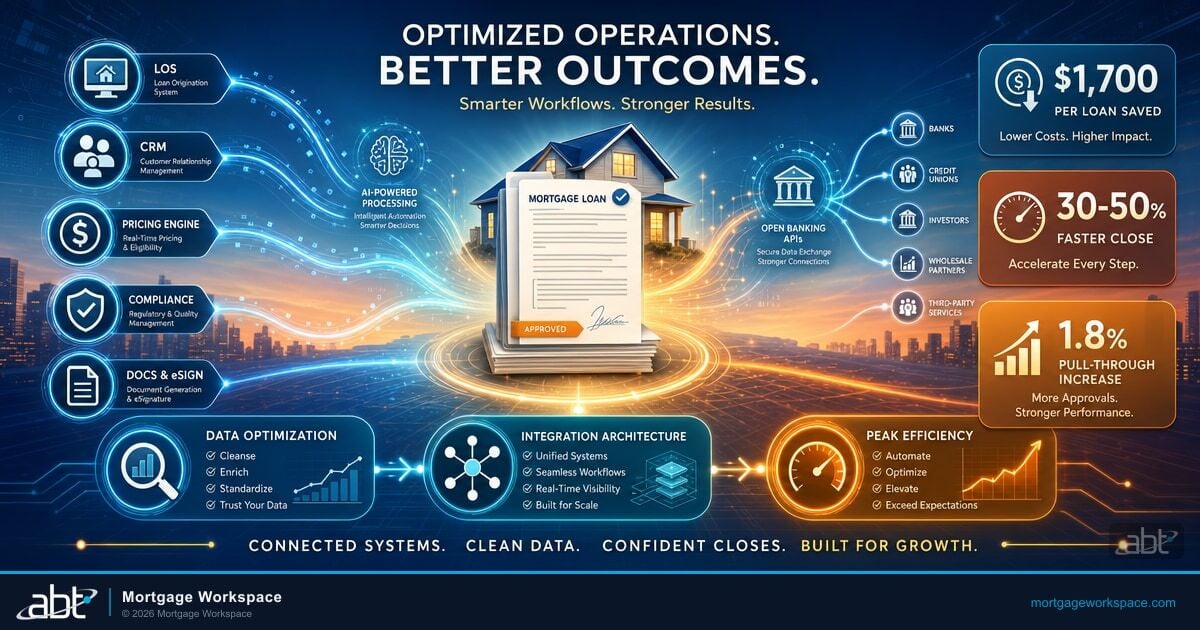
Lenders using connected data interfaces report 2.5x faster loan closures compared to industry averages. The speed comes from eliminating manual handoffs. When your processor completes a condition, the system notifies underwriting automatically. No email chains. No status meetings to ask "where's that file?" This connects closely to Simplifying the POS to LOS Connection.
Freddie Mac's LPA users who maximize their data interface usage see pull-through rates increase by 1.8%. On a $100M annual volume, that's $1.8M in additional funded loans.
3. Fewer Compliance Gaps
Disconnected systems create compliance blind spots. Your disclosure engine generates documents based on data in System A. But the most current borrower information lives in System B. The result: inaccurate disclosures, tolerance violations, and audit findings. For ABT's fuller take, see The Secret to Effective Mortgage Operations.
Data interfaces keep every system synchronized. When a fee changes in your LOS, your disclosure engine picks it up in real time. When an appraised value updates, your compliance checks recalculate automatically.
How to Implement Mortgage Data Interfaces
Step 1: Map Your Current Data Flow
Before connecting anything, document how data moves through your operation today. Which systems hold borrower data? Where does information get re-entered? Where do errors typically occur?
Most lenders discover 3-5 manual handoff points that could be automated with a data interface.
Step 2: Prioritize High-Volume Connections
Start with the connection that handles the most data transfers. For most lenders, that's the LOS-to-CRM connection or the LOS-to-document management link. Fix the busiest pipe first.
Step 3: Test with a Sandbox
Run your data interface in a test environment before going live. Verify that field mappings are correct, data formats match, and edge cases (co-borrowers, multiple properties, non-standard income) handle properly.
Step 4: Monitor After Launch
Data interfaces need ongoing monitoring. Fields change. Systems update. New regulations add required data points. Schedule quarterly audits to verify your connections still work correctly.
Technology providers serving 750+ financial institutions have built these monitoring capabilities into their platforms. MortgageExchange includes built-in sync monitoring and error alerting so your team catches failures before they affect loans in the pipeline.
Is Your Loan Data Flowing Cleanly From System to System?
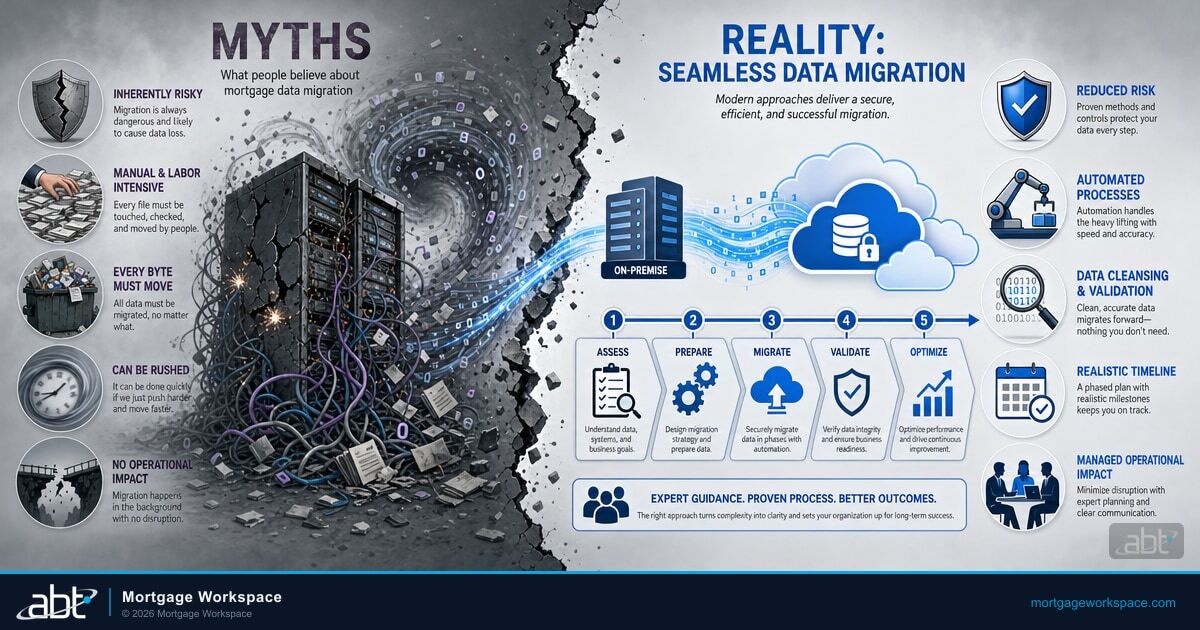
Disconnected interfaces turn loan data into chaos, with rekeying, errors, and delays at every handoff. MortgageWorkspace maps clean data journeys so information moves from capture to closing without friction.
Frequently Asked Questions
A mortgage data interface is a software connection that automatically transfers loan data, borrower records, and compliance information between your LOS, CRM, document management, and servicing platforms. It eliminates manual re-entry, reduces errors, and keeps every system in your lending operation synchronized with the same accurate data.
Mortgage data interfaces reduce origination costs by eliminating manual data re-entry between disconnected systems. Lenders using connected platforms save up to $1,700 per loan according to Freddie Mac's 2025 study. The savings come from fewer processing hours, reduced error correction, and faster pipeline throughput across the entire origination lifecycle.
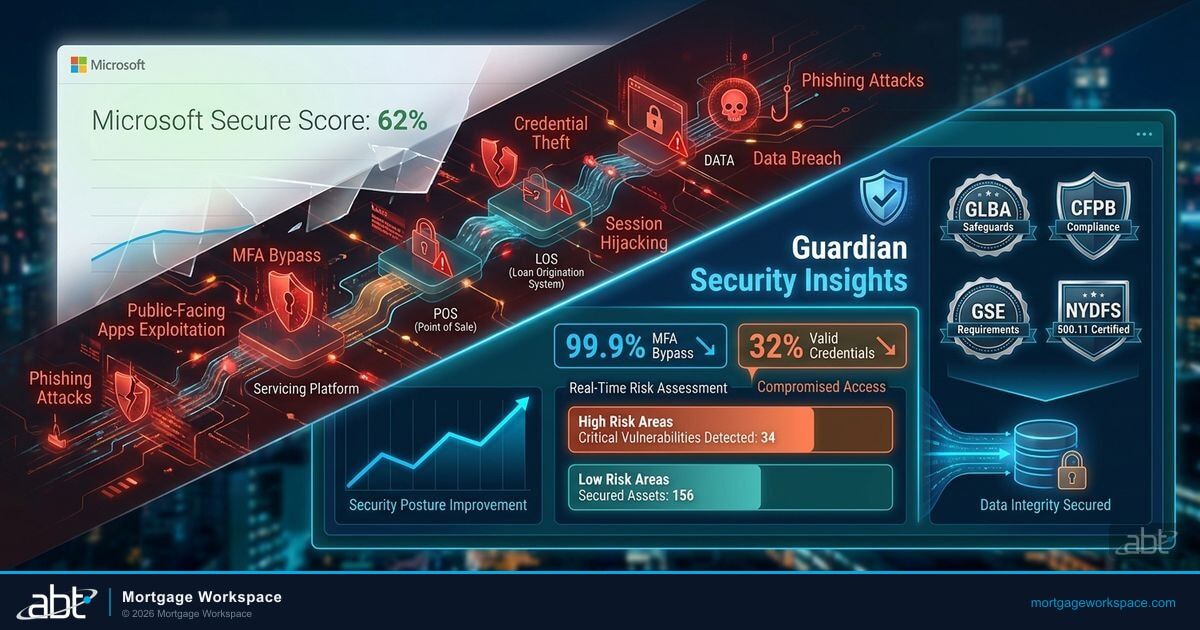
Multiple regulations require mortgage lenders to maintain accurate, synchronized data across their systems. GLBA and the FTC Safeguards Rule mandate data integrity and security controls. TRID rules require precise fee disclosures tied to real-time loan data. State-level regulations like NYDFS cybersecurity requirements add additional data accuracy standards that connected interfaces help satisfy.
Implementation timelines vary based on system complexity and the number of platforms being connected. A single LOS-to-CRM interface typically takes 4-8 weeks including testing. Full-stack integration connecting your LOS, CRM, document management, and servicing platforms may take 3-6 months with phased rollouts to minimize disruption.
Talk to a Mortgage IT Specialist
Connected data is the foundation of a fast, compliant mortgage operation. Talk to a mortgage IT specialist about how MortgageExchange and other data interface solutions can eliminate manual handoffs and keep your systems synchronized.