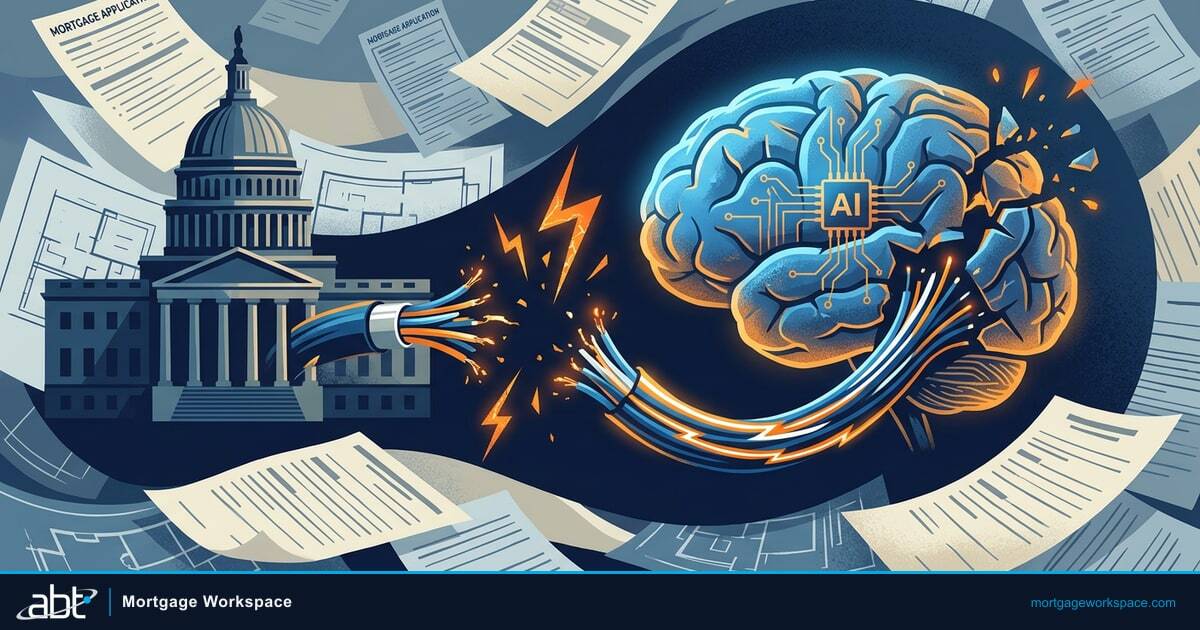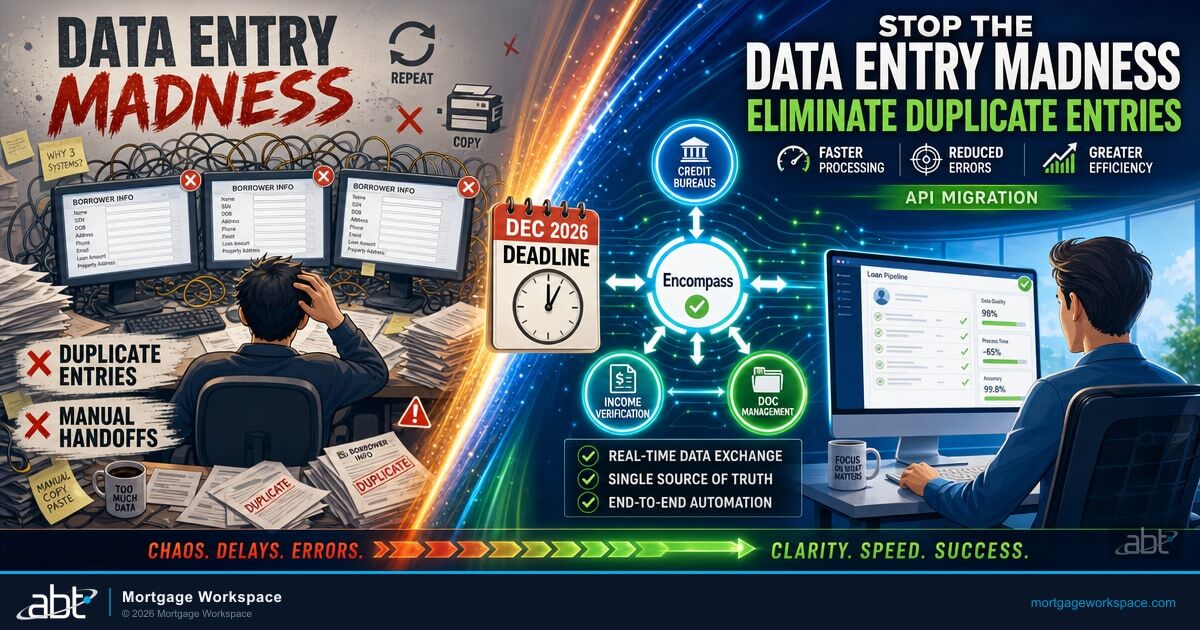
ICE Mortgage Technology pushed the Encompass SDK sunset to December 31, 2026. The original deadline was October 2025. Then it moved to May 2026. Now lenders have until year-end 2026 to migrate every SDK-based integration to the API-based Encompass Partner Connect platform. That extra time is not a gift. It is a warning about how much work remains.
Some lenders have already cut SDK usage by 95% by migrating their point-of-sale integration alone, according to ICE VP of Product Strategy Nancy Alley. Those lenders report faster loan processing and lower development costs. The rest are still running legacy plugins that slow down Encompass every time a loan opens or saves.
If your team keys the same borrower information into three different screens, the SDK migration gives you both a deadline and a reason to fix that problem permanently. This guide shows how smart mortgage operations eliminate duplicate data entry through properly designed interfaces, and how MortgageExchange and Mortgage BI turn that interface layer into an examination-ready data platform for community banks, credit unions, and independent mortgage companies.
In This Article
- What Mortgage Interfaces Do and Why They Break
- The Real Cost of Duplicate Data Entry in Mortgage Lending
- How Encompass Interfaces Eliminate Redundant Data Entry
- Six High-Impact Interface Connections for Encompass
- MortgageExchange and Mortgage BI: The Interface Layer and the Visibility Layer
- The SDK-to-API Migration: What Changed and What It Means
- Implementation Strategies That Survive Go-Live
- Common Interface Traps and How to Avoid Them
- Frequently Asked Questions
What Mortgage Interfaces Do and Why They Break
A mortgage interface connects two software systems so data flows without human reentry. Your loan origination system (Encompass, Calyx, Byte, MeridianLink) can exchange data directly with credit bureaus, income verification services, appraisal management companies, document management platforms, and your core banking system. Our earlier piece on how mortgage data interfaces create smooth data journeys covers the underlying pattern in more detail.
Without these connections, your staff becomes the interface. A loan officer enters borrower information into the LOS, then reenters it into the credit pull system, then copies verification results back. A processor transfers appraisal data by hand. A closer types figures into settlement documents that already exist in the loan file.
Interfaces break for three reasons: version mismatches when one system updates and the other does not, data format conflicts where fields map differently between platforms, and authentication failures when API credentials expire. Each failure pushes your team back to manual entry, often without anyone noticing until errors surface downstream.
The Real Cost of Duplicate Data Entry in Mortgage Lending
The visible cost is time. A loan officer spending 20 minutes reentering data across three systems per borrower, across a 150-loan-per-month pipeline, burns roughly 50 hours monthly. That is more than six full workdays lost to copying and pasting.
The hidden costs run deeper.
Error compounding. Every manual transfer introduces typos, transposed digits, or missed fields. A single wrong Social Security number can delay closing by a week. An incorrect property address triggers a title search on the wrong parcel. These errors cost borrower confidence and referral relationships.
Compliance exposure. Regulators expect consistent data across every system that touches a loan file. When your LOS shows one income figure, your credit report shows another, and your HMDA submission shows a third, the discrepancy becomes an examination finding. Manual processes make consistency nearly impossible across thousands of loans. The FFIEC IT Examination Handbook expects data integrity controls across every system used to produce borrower-facing or regulator-facing data, and our companion guide on always-audit-ready Encompass and Calyx configurations covers the documented data lineage examiners look for during an audit.
Staff turnover. Nobody builds a career in mortgage lending to spend their day copying data between screens. ICE Mortgage Technology reports that lenders who handle verifications within their system of record save roughly twenty-one dollars per loan. That savings comes almost entirely from eliminating manual handoffs.
How Encompass Interfaces Eliminate Redundant Data Entry
Well-designed Encompass interfaces create bidirectional data flow. Information entered once populates everywhere it is needed. Results from external services flow back into the loan file without human intervention.
Real-time synchronization. When a processor updates borrower employment status in Encompass, connected systems reflect that change within seconds. No batch processing delays. No overnight sync jobs running after everyone has gone home.
Automated document population. Interfaces pull data from credit bureaus, income verification services, and property databases to pre-fill forms and disclosures. Your team reviews and validates rather than typing from scratch. This shifts their role from data entry to quality review.
Bidirectional data flow. Credit scores, property valuations, employment confirmations, and flood certifications flow directly into the Encompass loan file. This is the difference between a true interface and a one-way data push. Bidirectional flow means the LOS always has the most current information from every connected service.
Standardized formatting. Different systems store data differently. Dates, phone numbers, addresses, and income figures each have multiple valid formats. Interfaces handle the translation automatically, converting data to match each system's requirements without manual reformatting.
Six High-Impact Interface Connections for Encompass
Not every interface delivers equal ROI. These six connections produce the largest time savings and error reduction for most mortgage operations.
1. Credit bureau interfaces. Automated credit pulls and refreshes throughout the loan lifecycle. Advanced connections trigger alerts when borrower scores change before closing, giving your team time to address issues before they derail the deal.
2. Income and employment verification. Direct connections to services like The Work Number and Equifax Workforce Solutions eliminate manual employment verification. Results populate the loan file in minutes. What used to take days of phone calls and fax requests now happens automatically.
3. Property valuation systems. Interfaces with appraisal management companies and automated valuation models deliver property data directly into Encompass. This connection matters most for high-volume operations where manual appraisal data entry creates bottlenecks at underwriting.
4. Document management integration. When your document imaging system connects to Encompass, files uploaded in one location appear in the other automatically. Borrowers uploading documents through a portal do not create separate work queues that someone must reconcile with the loan file by hand.
5. Investor delivery systems. Fannie Mae, Freddie Mac, and Ginnie Mae each have specific data format requirements. Properly built interfaces format and transmit loan data according to each investor's specifications. This eliminates the manual reformatting that delays secondary market delivery.
6. Title and settlement connections. Sharing loan details with title companies and receiving closing documents electronically removes days of manual document exchange from the closing timeline. This integration is especially valuable for purchase transactions where closing dates are contractually fixed.
MortgageExchange and Mortgage BI: The Interface Layer and the Visibility Layer
Most mortgage shops do not have a single integration problem. They have a portfolio of them: a credit bureau plugin built in 2018, an AVM connector that has changed hands twice, a homegrown export to the core banking system, and a quarterly HMDA file someone still pieces together by hand. Each one was designed in isolation. None of them know about the others. The duplicate data entry that frustrates your team is the visible symptom. The deeper problem is that no single layer owns the truth about a borrower record across the systems that touch it.
MortgageExchange is the interface layer that solves that problem. It is ABT's purpose-built integration platform that connects loan origination systems (Encompass, Byte, MeridianLink, Calyx PointCentral) to core banking platforms (Symitar, Episys, Jack Henry, FIS, Fiserv DNA), credit bureaus, income and employment verification services, automated valuation models, document management platforms, escrow and tax service providers, AUS engines, and CRM systems. Source-of-truth fields, such as borrower name, Social Security number, property address, income, loan amount, note rate, escrow balance, and closing date, are synchronized in real time across every system that touches the loan. The loan officer enters the borrower once. The processor sees the same data in Encompass. The closer sees the same data in the settlement system. The core banking system sees the same data the day the loan funds. The duplicate keystroke goes away because the duplicate field has been eliminated upstream.
Mortgage BI is the visibility layer on top of MortgageExchange. An interface platform that is silently doing its job is invisible by design, which is also how silent failures hide for months. Mortgage BI is the dashboard and reporting layer that shows where data still mismatches across connected systems, where interface latency is climbing, where credit pulls or AVM calls are failing more often than they should, and which integrations are returning the biggest measurable ROI. Mortgage operations leaders open Mortgage BI to see a unified pipeline view across LOS, core, and servicing. IT leaders open it to see interface health and integration cost-per-loan. Compliance officers open it to see HMDA data lineage and the audit trail that examiners look for. Mortgage BI reads from MortgageExchange. The institution reads from Mortgage BI. The data plumbing problem that kills most internal Power BI rollouts is solved before the dashboard opens.
The combination is what makes the SDK-to-API migration easier rather than harder. MortgageExchange has been built and battle-tested against every major LOS and every major core banking platform across more than two decades of FI deployments. When the Encompass SDK sunset forces a re-architecture, your team is not starting from scratch. The interface footprint already exists. The migration shifts the underlying transport from SDK to Encompass Partner Connect APIs without your loan officers, processors, or closers experiencing a workflow break. Mortgage BI's interface-health dashboard shows the migration cut over cleanly, integration by integration, with measurable proof.
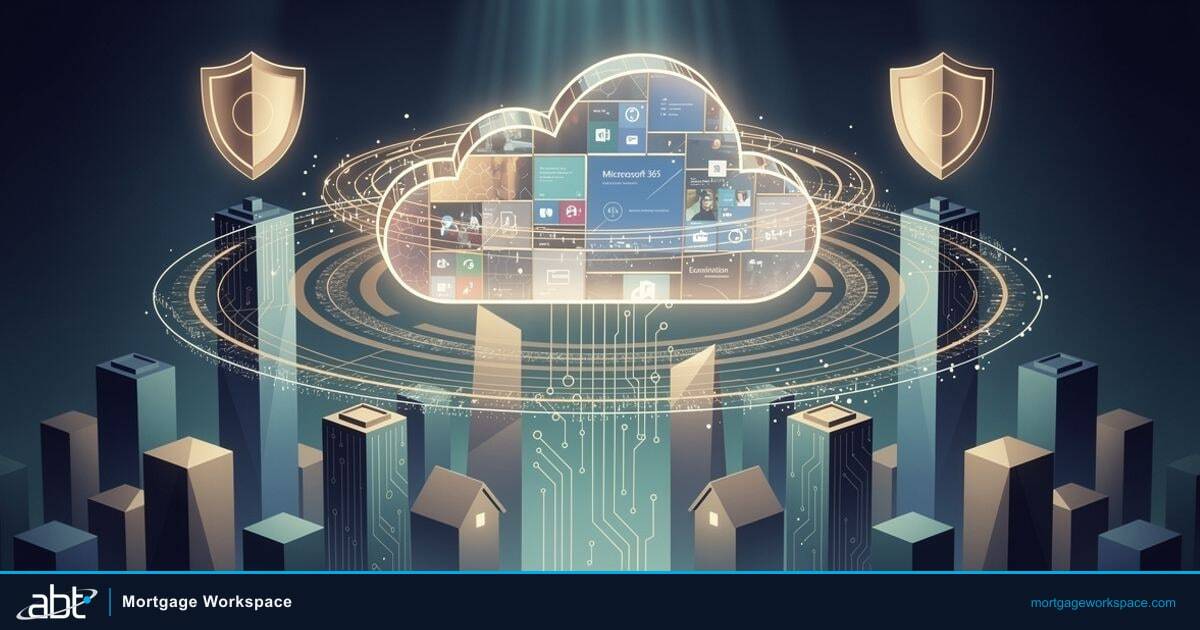
Mortgage BI sits inside the Microsoft 365 tenant ABT manages for you under Tier 1 Cloud Solution Provider delegated admin. Microsoft Entra ID Conditional Access controls who can open the dashboard and from where. Microsoft Purview Information Protection labels the underlying datasets. Microsoft Purview Audit logs every parameter change. M365 Guardian is the operating model that ties those Microsoft controls into the broker-dealer-grade, examiner-ready posture that an FFIEC IT examiner expects to see on any system used to produce HMDA, escrow disclosure, or compliance reporting data. For institutions that want to see the same data plumbing pattern applied to borrower-facing analytics, our piece on visualizing combined tax and mortgage payment trends with Mortgage BI walks through how MortgageExchange feeds the dashboards loan officers use during borrower conversations.
The SDK-to-API Migration: What Changed and What It Means
ICE Mortgage Technology extended the Encompass SDK sunset to December 31, 2026. The original October 2025 deadline drew enough industry pushback to force two extensions. Here is what the final timeline means for your operation.
SDK-based integrations run code every time a loan opens or saves. This slows down the Encompass client and creates stability issues as both the LOS and the integration code compete for system resources. API-based connections through Encompass Partner Connect operate independently, making Encompass faster and more stable.
The practical impact: every third-party vendor plugged into your Encompass environment needs an API-based alternative ready by year-end 2026. If your credit pull provider, compliance checker, or document management system still runs on SDK plugins, confirm their migration plan now. After December 2026, transitional SDK access requires special approval and monthly fees.
Companies that treat this as a forced upgrade opportunity will benefit the most. The EPC platform supports richer data exchange, more reliable connections, and better error handling than the aging SDK. Use this migration to audit every integration, eliminate redundant connections, and build a faster home loan process through Encompass interface customization. MortgageExchange consolidates that stack onto one governed interface layer instead of a portfolio of one-off connections, which is the version of the project that survives the next platform change too.
Implementation Strategies That Survive Go-Live
Most interface failures happen after implementation, not during it. These strategies prevent the common post-launch problems that send teams back to manual processes.
Start with the highest-volume manual process. Identify which data entry task your team performs most frequently. Eliminate that one first. The quick win builds momentum and demonstrates ROI before you tackle more complex integrations.
Map your data fields before touching code. Different systems call the same information by different names. "Borrower Last Name" in one system might be "Primary Applicant Surname" in another. Create a complete field mapping document before implementation begins. This step prevents the most common cause of interface errors.
Test with real (anonymized) loan data. Synthetic test data does not catch real-world edge cases. Run 50 to 100 actual loan files through the interface in a sandbox environment. Pay special attention to co-borrowers, trusts, LLCs, non-standard property types, and loans with multiple modifications.
Build error handling before you need it. Every interface will fail eventually. Define what happens when a connection drops: Does the system queue the request and retry? Does it alert a specific person? Does it fall back to manual entry with a log entry? Having clear protocols prevents confusion when a failure hits at 4:45 PM on a Friday before a Monday closing.
Train for exceptions, not just the happy path. Your team needs to know what normal interface operation looks like so they can spot when something goes wrong. Show them successful syncs, failed syncs, and exactly what to do in each scenario. Mortgage BI's interface-health view is the single screen where your operations and IT teams can spot a drift before borrowers do.
Common Interface Traps and How to Avoid Them
Over-engineering the first version. Build the simplest version that solves the problem, then improve it. Complex interfaces with dozens of conditional logic paths break more often and are harder to troubleshoot.
Ignoring data quality at the source. Interfaces do not fix bad data. They distribute it faster. If your Encompass records have inconsistent formatting, missing fields, or outdated information, clean the data before building automated transfers. Mortgage BI surfaces the source-system data quality gaps so the cleanup is targeted rather than open-ended.
Vendor lock-in through proprietary connections. Some integration vendors build connections that only work through their platform. This makes switching expensive or impossible later. Prioritize vendors that use standard APIs and documented data formats.
Skipping monitoring after launch. An interface that worked for six months can break silently after a system update on either end. Set up automated monitoring that alerts your team when data flow stops, error rates spike, or sync latency exceeds acceptable thresholds.
Access Business Technologies has designed and deployed mortgage interface configurations for hundreds of community banks, credit unions, and independent mortgage companies. The combined footprint of MortgageExchange (the interface layer) and Mortgage BI (the visibility layer) is why our customers approach the SDK-to-API migration as an upgrade instead of an emergency. We are a Tier 1 Microsoft Cloud Solution Provider serving more than 750 financial institutions, and we manage the Microsoft 365 tenant that both products run inside, with M365 Guardian as the operating model that keeps the whole footprint examination-ready.
Stop the data entry madness on a single governed interface layer
MortgageExchange connects Encompass to your core banking platform, credit bureaus, AVMs, AUS engines, and document systems so source-of-truth fields synchronize automatically. Mortgage BI gives your operations, IT, and compliance teams the visibility to prove it. Both run inside the Microsoft 365 tenant ABT manages for you under M365 Guardian.
Frequently Asked Questions
Single interface connections take two to six weeks from planning through go-live, depending on complexity and vendor responsiveness. Multi-system integrations involving three or more connected platforms may require eight to twelve weeks. Data field mapping and testing account for roughly half the total implementation timeline in most mortgage operations. MortgageExchange shortens the timeline meaningfully because the interface footprint against Encompass, Byte, MeridianLink, Symitar, Episys, Jack Henry, FIS, Fiserv DNA, and Calyx PointCentral already exists rather than being built from scratch.
After December 31, 2026, continued SDK access requires special approval from ICE and monthly fees. ICE is pushing all vendors toward the API-based Encompass Partner Connect platform. Contact each integration vendor now to confirm their EPC migration timeline. Vendors without a clear API plan put your operations at risk of disruption when the fee-based extension period ends. Lenders running on MortgageExchange consolidate the migration onto one governed interface layer instead of coordinating dozens of point-to-point cutovers, which is the version of the project that survives the next platform change too.
Rank your manual data entry tasks by frequency and time spent per occurrence. Credit bureau pulls and income verification produce the highest ROI because they happen on every loan and involve significant manual effort without interfaces. After those, focus on document management and investor delivery connections, which reduce bottlenecks at processing and post-closing stages. Mortgage BI's interface-health dashboard ranks the highest-volume manual processes for you using the data already flowing through MortgageExchange, so the priority order is driven by your actual loan mix rather than by a vendor's pitch.
Most established mortgage service providers are migrating to EPC-compatible API integrations. Smaller or legacy vendors may lag behind or lack the resources for a full migration. Request written confirmation of each vendor's EPC readiness and their target completion date. Test each migrated connection in a sandbox environment before deploying to production to verify data flow matches your existing behavior. Mortgage BI tracks the migrated connections against the legacy SDK baseline so you can prove the cutover succeeded with measurable error rates and latency, not just vendor assurances.
Properly configured interfaces reduce HMDA reporting errors by ensuring consistent data across all systems that feed compliance reporting. When borrower demographics, loan amounts, and property information flow automatically from a single source in Encompass, the discrepancies that trigger examination findings become far less likely. Automated validation at the interface level catches format errors before they reach the HMDA submission. MortgageExchange maintains the source-of-truth synchronization across LOS, core, and servicing, and Mortgage BI exposes the documented data lineage examiners expect when they sample the HMDA file against the underlying loan records.
Yes. MortgageExchange has been built and battle-tested against Encompass, Byte, MeridianLink, Calyx PointCentral, Symitar, Episys, Jack Henry, FIS, Fiserv DNA, and custom platforms over more than two decades of community-bank, credit-union, and independent-mortgage-company deployments. Once connected, the interface layer keeps source-of-truth fields synchronized across LOS, core, document management, AUS, CRM, and servicing systems automatically. Mortgage BI sits on top of MortgageExchange as the visibility layer that operations, IT, and compliance teams use to confirm the integrations are healthy and to track measurable ROI as duplicate data entry disappears.